A measured fitting, a trial period, and a follow-up visit so your lenses feel comfortable from morning to night.
A contact lens fitting is a separate appointment from your comprehensive eye exam, because a lens that matches your prescription still has to match the shape and surface of your eye. Curvature, diameter, tear quality, and how the lens moves when you blink all decide whether a lens feels invisible at 8pm or unbearable by lunch.
We measure the front surface of the eye, review your tear film, and select trial lenses based on those numbers rather than a default brand. Once the trial lenses have settled, the doctor checks centration, movement, and vision, and adjusts the choice until the fit holds steady through a normal blink pattern.
You leave with trial lenses to wear in your own routine, written wear and care instructions, and a follow-up visit already on the calendar. Once the fit and comfort are confirmed at that visit, we release your contact lens prescription and you can order from us or anywhere you like.
The most common choice, available in daily, two-week, and monthly replacement schedules. Soft lenses are flexible, comfortable within minutes for most wearers, and forgiving if you only wear lenses a few days a week. Dailies remove cleaning and storage from the routine entirely, while monthlies cost less per year but ask for consistent care. We help you weigh comfort, budget, and how often you actually wear lenses.
Best for: Best for first-time wearers and part-time, on-and-off wear.
Firmer lenses that hold their shape on the eye and deliver the sharpest optics available in a contact lens. They ask for a short adaptation period, usually a week or two of building wear time, and in exchange they last far longer than soft lenses and resist deposits. Because the fit is precise, we take detailed corneal measurements and often refine the lens across two visits.
Best for: Best for high prescriptions, irregular corneas, and crisp detail vision.
Designed for astigmatism, toric lenses carry different powers in different meridians, so they have to stay oriented correctly on the eye to keep vision stable. We check rotation and stability at the trial visit, watching how the lens settles after a blink and after a full day of wear. A second trial with a different design is common before the prescription is finalized.
Best for: Best for astigmatism that leaves standard lenses blurry or shifting.
One lens handles distance and near vision through concentric or blended zones, so reading glasses stay in the drawer. Expect an adjustment period while your brain learns to favor the right zone, and expect us to balance the two eyes rather than maximizing each one alone. A follow-up visit is part of the process, and small power changes often make the difference.
Best for: Best for wearers over 40 who want distance and reading in one lens.
One eye is corrected for distance and the other for near, and the brain learns to select between them. It is simpler and often less expensive than a multifocal, and some patients prefer the clarity at each individual distance. The trade-off is depth perception, most noticeable at night or while driving, so we always test tolerance with a trial period first.
Best for: Best for patients who want a simple, lower-cost reading solution.
A fitting is for new wearers and for anyone whose current lenses have stopped working the way they used to. If any of the following sounds familiar, it is worth an appointment.
We confirm your benefits, then talk through how you plan to use lenses: full-time or weekends, screens or sports, comfort priorities, and anything that went wrong with lenses before. That conversation narrows the lens options before a single measurement is taken.
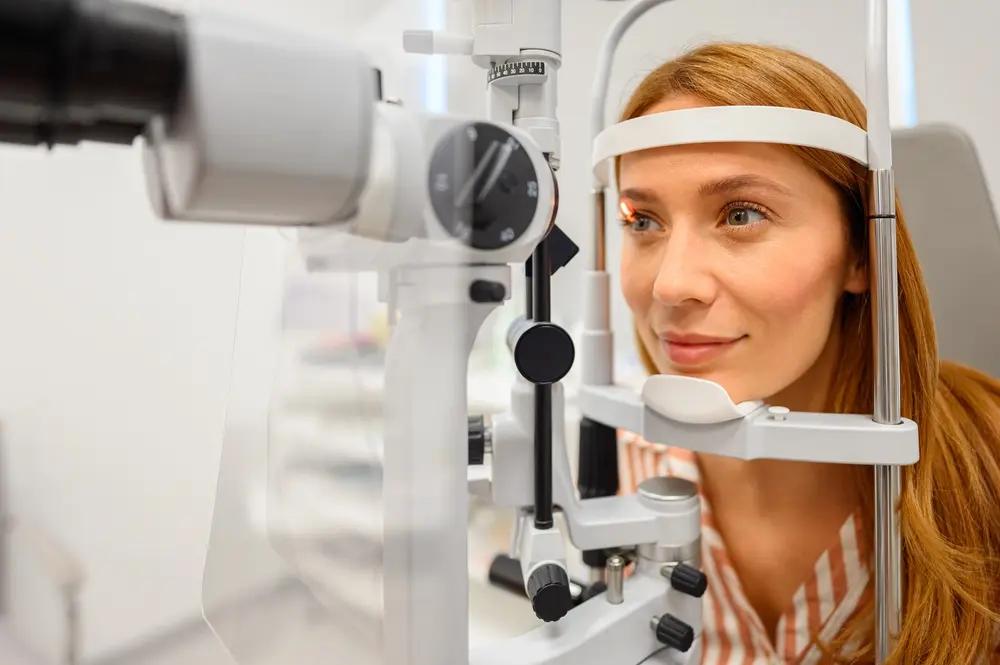
We measure corneal curvature and diameter, evaluate your tear film and lid margins, and check the health of the front surface of the eye. These numbers determine which base curves and materials are realistic candidates for your eye specifically.
You wear trial lenses for roughly fifteen minutes so they settle. The doctor then evaluates centration, movement on blink, and comfort, and checks your vision through the lenses at distance and near before deciding whether to keep or change the design.
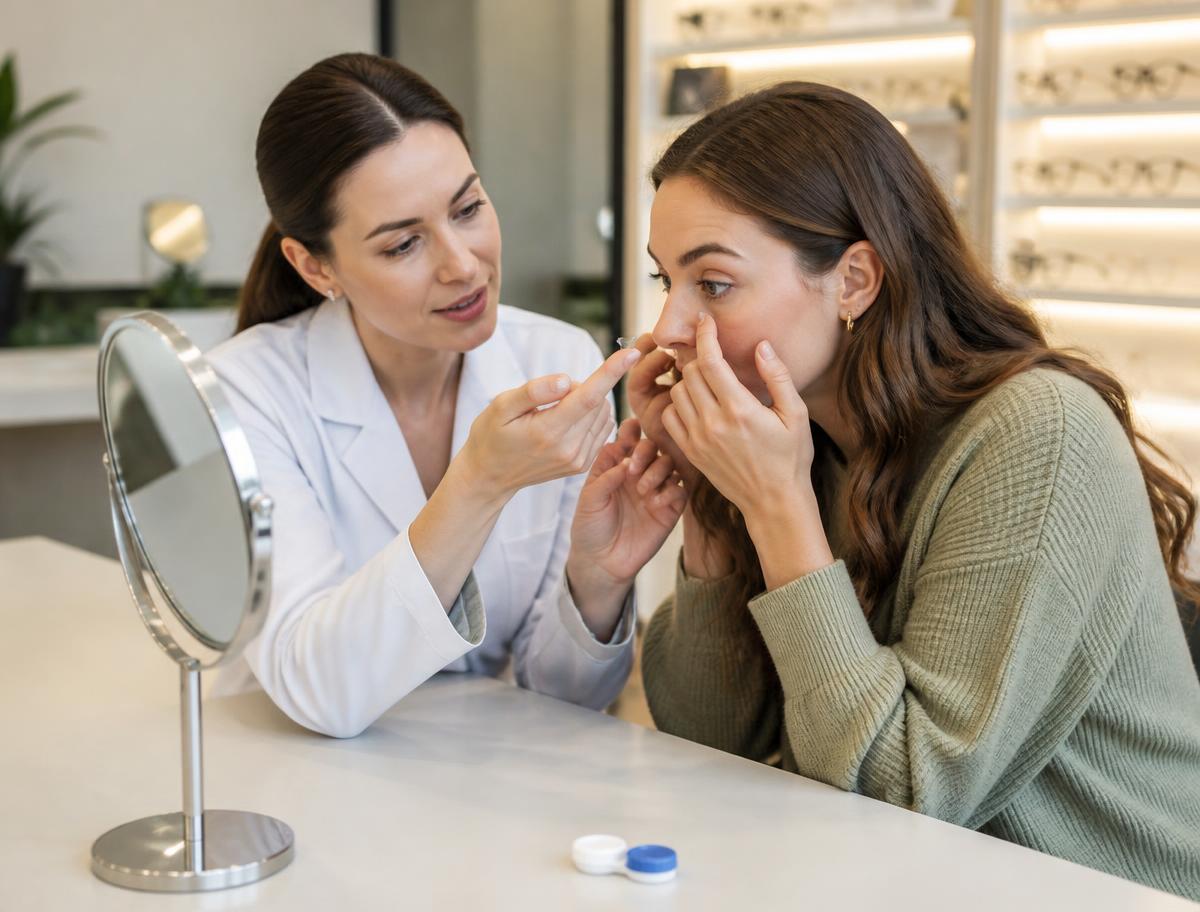
A team member walks you through insertion, removal, cleaning, storage, and replacement, and stays with you until you can do it confidently on your own. You go home with trial lenses and written instructions to try in your normal week.
At your follow-up we recheck the fit after real-world wear, adjust power or design if anything felt off, and confirm the eye is healthy in the lens. Once everything checks out, your contact lens prescription is finalized and released.
First-time wearers get extra time in the chair, and nobody leaves until they can insert and remove a lens on their own. A team member sits with you through as many attempts as it takes, then sends you home with a written routine covering cleaning, storage, replacement schedule, and the situations where lenses should come out. Expect a short adaptation period during the first week, with wear time built up gradually rather than jumping straight to twelve-hour days. A follow-up visit is scheduled before you leave, and if something feels wrong in between, call us instead of pushing through it.
Fittings are usually available the same week, and we verify your benefits before you arrive.
Two people with identical prescriptions rarely wear the same lens well. We measure the curvature and diameter of your cornea, assess tear volume and quality, and look at how your lids interact with the lens edge, then choose trials from those findings. During the trial we watch the lens settle, blink, and recover, because a lens that looks perfect at minute one can decenter by hour eight. What we learn from your trial period, not the prescription alone, is what ends up on your final prescription.
The technical fit only matters if the routine is manageable at home. We spend unhurried time on insertion and removal, hand you a written care and replacement schedule, and set expected wear times for the first few weeks so the adaptation is gradual. Between visits, you can call us with questions about redness, dryness, or a lens that will not sit right. Experienced wearers get the same process when they switch lens types or come back after a long break.
We accept VSP, EyeMed, Heritage, Blue Shield, and Medicare. We verify your benefits before the appointment so you know your contact lens allowance, copay, and out-of-pocket costs in advance. Out-of-network patients are welcome and receive itemized paperwork for reimbursement.
Don't see your plan? We're happy to check. Call (310) 305-2950 with your plan details and we'll confirm your allowance and copay before your visit.
A contact lens fitting is billed separately from a comprehensive eye exam. The fee covers the measurements, trial lenses, insertion and removal training, and the follow-up visit where your prescription is finalized. We quote the exact amount before your appointment, and any vision plan allowance is applied first.
Comprehensive eye care with a focus on ocular disease management and specialty contact lens fittings.
Comprehensive exams for all ages, dry eye treatment, and pediatric myopia management.
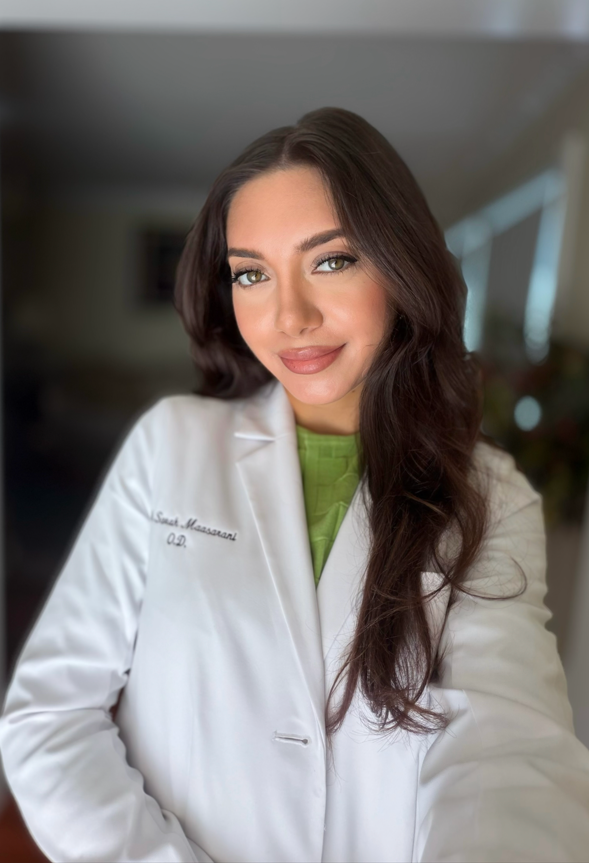
Board-certified optometrist with residency training in ocular disease and a focus on preventive, patient-centered care.
Office Hours
| Monday | 10:00am – 6:00pm |
| Tuesday | 10:00am – 6:00pm |
| Wednesday | 10:00am – 6:00pm |
| Thursday | 10:00am – 6:00pm |
| Friday | 10:00am – 6:00pm |
| Saturday | 10:00am – 6:00pm |
| Sunday | 11:00am – 4:00pm |
Plan on about an hour for the fitting itself, plus additional time if you are a first-time wearer learning insertion and removal. Trial lenses need roughly fifteen minutes on the eye before the doctor can evaluate the fit accurately, so the appointment has a built-in settling period. A shorter follow-up visit, usually fifteen to twenty minutes, confirms the fit after you have worn the lenses in your normal routine.
No. A contact lens fitting is a separate service with its own fee, because it involves additional measurements, trial lenses, training, and a follow-up visit that a comprehensive exam does not include. VSP, EyeMed, Heritage, Blue Shield, and Medicare benefits vary, so we verify your allowance and quote the fee before your appointment so nothing is a surprise at checkout.
Yes. Toric lenses are designed specifically for astigmatism, with different powers in different meridians and a design that keeps the lens oriented correctly on the eye. The fit matters more than with a standard lens, since rotation causes vision to shift. If earlier lenses felt blurry or unstable, a proper toric fitting with a settling period and a follow-up often solves it.
We recommend keeping a current pair. Eyes need occasional breaks from lenses, and infections, irritation, or a torn lens can leave you without correction at the worst moment. Glasses are also the safer choice for late nights, long flights, and any day your eyes feel dry. Your glasses and contact lens prescriptions are not identical, so both are written separately.
It depends on the lens. Dailies are discarded every night, two-week and monthly lenses are replaced on schedule with nightly cleaning and storage in between, and rigid gas permeable lenses often last a year or more with proper care. Stretching a replacement schedule is one of the most common causes of irritation and infection, so we set the schedule clearly at your fitting.
Often yes. Afternoon dryness can come from lens material, replacement schedule, screen habits, or an underlying tear film issue that a refit alone will not solve. We evaluate your tear quality at the fitting and address it before selecting lenses, since a dry surface undermines even a well-fitted lens. Sometimes a switch to daily disposables is all it takes.
Many children do well in lenses, especially for sports, and daily disposables simplify the hygiene considerably. Readiness has more to do with responsibility than age: handling, cleaning, and honest reporting when something feels wrong. We train the child directly, involve the parent in the care routine, and schedule a follow-up to confirm both the fit and the habits are holding.
Call us. That is exactly what the follow-up visit is for, and we would rather see you early than have you push through discomfort. Small changes in power, base curve, material, or replacement schedule resolve most complaints, and adjustments during the trial period are part of the fitting fee. Remove the lenses and contact us if you notice pain, redness, or sudden blur.
Same-week fittings are usually available. Book online in under a minute or give us a call.