A contact lens prescription is not a glasses prescription with the numbers copied over. A lens sits on the cornea, so it has to match the curve and width of your eye as well as its power. The exam measures both, you try real lenses, and a follow-up confirms they are right before the prescription is finalized.
Two people with the same glasses prescription can need different contact lenses. The lens has a curve and a diameter, and if either is wrong for your cornea the lens moves, dries, or sits tight, and vision drifts in and out even though the power is correct. The fitting is the part of the process that gets those two numbers right.
It starts with a comprehensive eye exam, because a lens is only prescribed for a healthy surface. Then the cornea is measured, a lens type is chosen for your prescription and the way you live, and you wear trial lenses for a week or two. The follow-up checks how the lens moves, how the cornea looks underneath it, and how your vision holds at the end of a day.
If you already wear contacts and want to keep the same lens, the fitting is shorter: the doctor confirms the fit and the health of the eye and renews the prescription. If the lens has stopped feeling right, this is where a better one gets found.
A fresh lens every morning and nothing to clean. Dailies carry the lowest infection risk because nothing is reused, and they suit dry or allergy-prone eyes, part-time wearers, and anyone who does not want a case and solution in their life.
Best for: Best for: first-time wearers, part-time wear, allergies, dry eyes, travel.
One lens worn for its replacement period, cleaned and stored each night. Many of the most breathable materials and the widest range of powers come in this format, which is why strong or unusual prescriptions often land here.
Best for: Best for: full-time wear, high prescriptions, wearers who are disciplined about cleaning.
Astigmatism means the cornea is shaped more like a spoon than a bowl, and a standard lens rotates and blurs. A toric lens is weighted to stay oriented. Fitting one takes more care and sometimes a second trial, and modern torics come in daily and monthly versions.
Best for: Best for: anyone whose glasses prescription has a cylinder value.
After 40 the eye stops focusing up close, and a single-vision contact leaves you reaching for readers. Multifocal lenses carry distance and near zones in one lens. Some people adapt in days; others do better with monovision, one eye set for distance and one for near, which the trial period sorts out.
Best for: Best for: wearers over 40 who want to stay out of reading glasses.
A rigid lens holds its shape on the eye and gives the sharpest vision for some prescriptions. They take a few weeks to get used to and last longer than soft lenses. The doctor will say if your eyes are a candidate.
Best for: Best for: high astigmatism, wearers who prize sharpness over comfort.
A fitting is for anyone new to lenses, and for anyone whose current lenses are not doing their job.
Your prescription, the health of the cornea and tear film, and how your eyes work together. A lens is only fitted on a healthy eye, and dry eye found here is treated before lenses, not after.
The curve of the cornea is measured, along with its width and your pupil size. Those numbers set the lens curve and diameter. The doctor also asks how many hours a day you want to wear lenses and what you do in them.
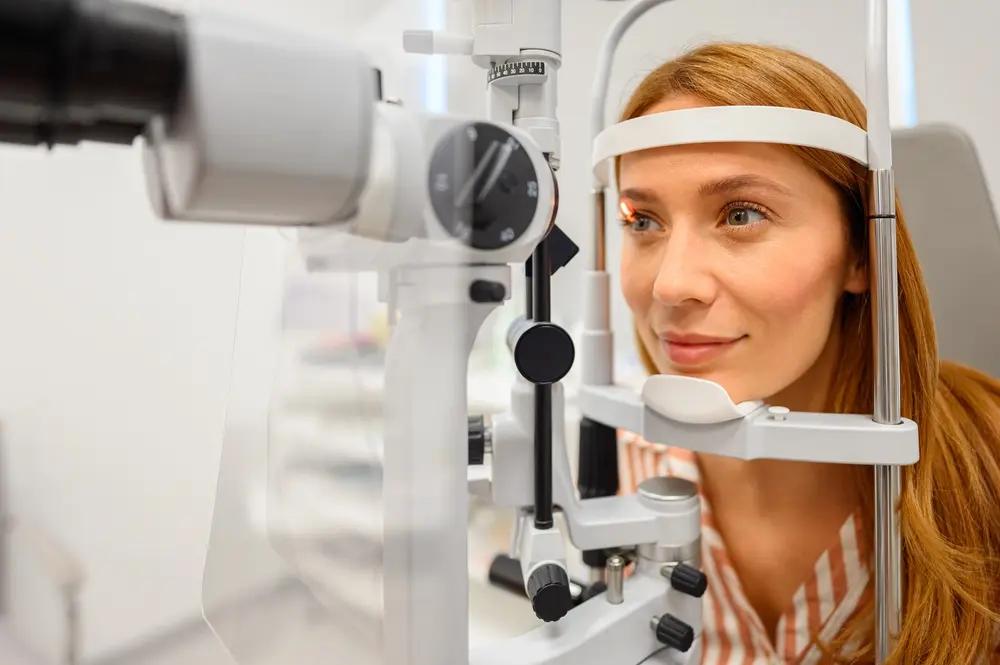
A lens type is chosen and a trial pair goes on. The doctor checks how it moves when you blink and how it sits under the slit lamp, then refines the power while you are wearing it. You leave with trials to wear in real life.
About a week later the lenses are checked again after a full day of wear: fit, comfort, vision at the end of the day, and the cornea underneath. If something is off, a different lens is tried. The prescription is finalized only when it is right.
Your lenses can be ordered through the office, with home delivery, so reordering is a phone call. The prescription is yours to fill anywhere, and an annual exam keeps it current and checks the eye is still happy in the lens.
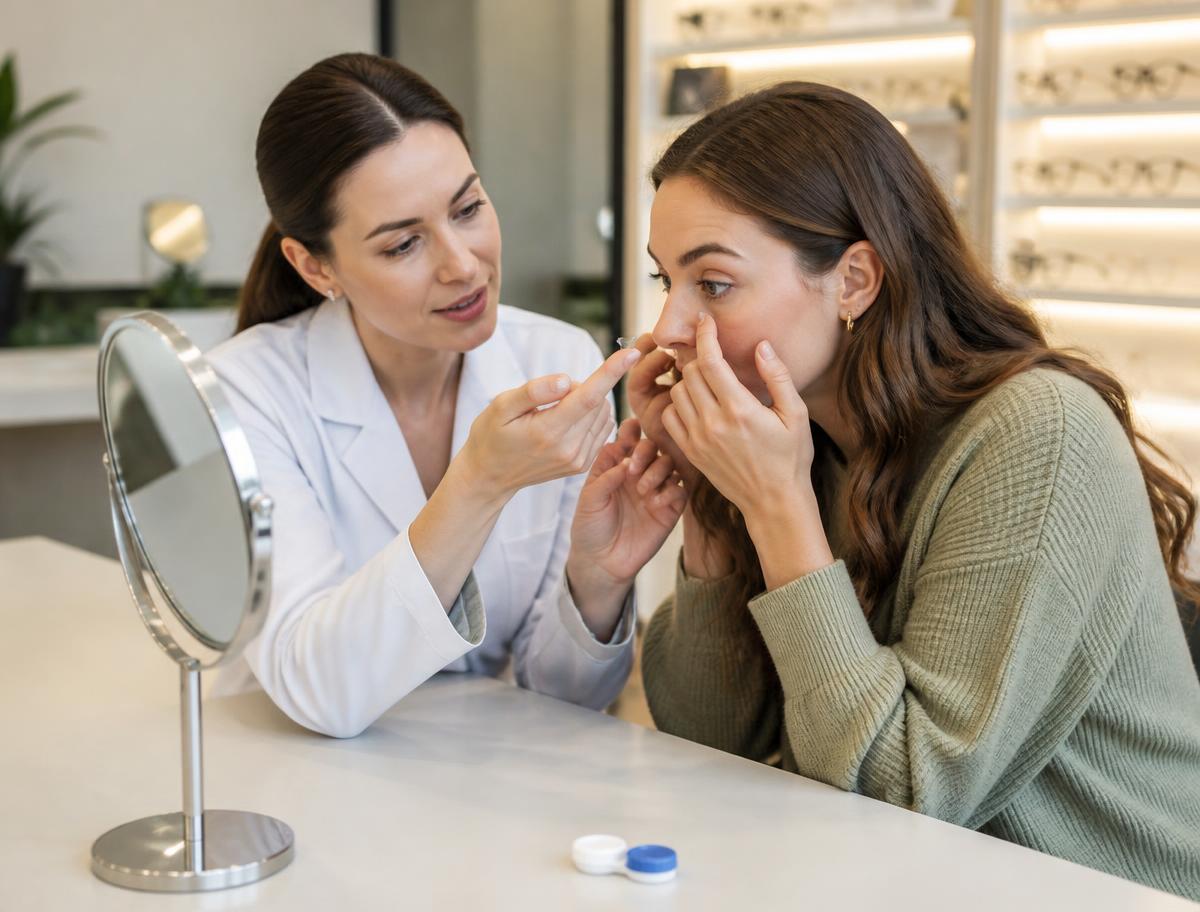
Your first fitting includes a training session: putting a lens in, taking it out, and what to do when it folds or sits off-center, practiced in the office until you can do it on your own. You leave with trial lenses, a wear schedule that starts at a few hours a day, and a follow-up booked for about a week later. Most new wearers are comfortable within that week.
Book a contact lens exam online, or call (310) 305-2950. New wearers welcome.
The curve of a lens that fit at 25 can be wrong at 40, materials change, and a cornea that has been under a lens for a decade needs checking more, not less. The annual contact lens exam looks for the early signs of oxygen shortage and surface damage that a wearer never feels, and renews the prescription. Skipping it is how a comfortable lens becomes an infection.
Almost any lens feels fine at nine in the morning. The lens that fits is the one still comfortable at six, with vision that has not drifted. That is why the follow-up is booked late in the day where possible, and why the trial period is real wear, at work and on screens, not ten minutes in the chair.

Many vision plans carry a contact lens benefit alongside the exam benefit, and some cover the fitting itself. Benefits differ by plan and by lens type, so bring your plan details or call (310) 305-2950 before you book and the front desk will tell you what yours includes. The plans accepted are listed below.
A visit for a red or painful eye in a lens wearer is a medical visit and bills to medical insurance instead. Take the lens out and call the same day.
A contact lens fitting is billed separately from a comprehensive eye exam. The fee covers the measurements, trial lenses, insertion and removal training, and the follow-up visit where your prescription is finalized. We quote the exact amount before your appointment, and any vision plan allowance is applied first.
Doctor of Optometry since 1994, with certificates in the treatment and management of ocular disease and of glaucoma.
Residency in pediatrics, vision therapy, and neuro-optometric rehabilitation. Glaucoma certified, licensed in California and Washington.
UC Berkeley Doctor of Optometry with a residency in ocular disease. Glaucoma and therapeutic pharmaceutical agent certified.
Office Hours
| Monday | 10:00am – 6:00pm |
| Tuesday | 10:00am – 6:00pm |
| Wednesday | 10:00am – 6:00pm |
| Thursday | 10:00am – 6:00pm |
| Friday | 10:00am – 6:00pm |
| Saturday | 10:00am – 6:00pm |
| Sunday | 11:00am – 4:00pm |
Yes. A contact lens is a medical device that sits on the cornea, and the law requires a valid contact lens prescription, which only a fitting produces. The fitting is also what catches a lens that is too tight or too loose, which you cannot feel but your cornea can.
After a comprehensive exam, the cornea is measured for curve and width, a lens type is chosen, and trial lenses go on. The doctor checks the fit under magnification and refines the power with the lens in place. You wear the trials for about a week, then a follow-up confirms fit and comfort before the prescription is written.
A contact lens exam includes the comprehensive exam, because the prescription and the health of the eye have to be current before a lens is fitted. If you had a full exam here recently, the fitting can be added without repeating it. Tell the front desk when you book.
Yes, once a year, to renew the prescription and check the cornea under the lens. If you are happy in your current lens the visit is short: fit confirmed, eye health checked, prescription renewed. If the lens has stopped feeling right, this is where a better one is found.
Many vision plans include the exam and carry a separate contact lens benefit; some also cover the fitting. It varies by plan and by lens type. Call (310) 305-2950 with your plan name and the front desk will tell you what yours covers before you book.
Almost always. Toric lenses are weighted to stay oriented on an astigmatic cornea, and they come in daily and monthly versions. Higher amounts of astigmatism may need a rigid lens instead, which gives sharper vision once you are used to it. The fitting decides which.
Dailies are the healthier default: a fresh sterile lens every day, nothing to clean, lowest infection risk, and the best choice for dry or allergic eyes and part-time wear. Monthlies cost less per day of wear and come in more materials and powers, which matters for strong prescriptions. The doctor will tell you if your eyes narrow the choice.
Yes. Multifocal contact lenses carry distance and near correction in one lens, and most people adapt within a couple of weeks. The alternative is monovision, one eye corrected for distance and the other for near. The trial period is how you find out which your brain prefers.
Soft lenses feel normal for most new wearers within a few days, and the wear schedule starts at a few hours and builds. Rigid lenses take two to four weeks. Any lens that still hurts after the first few days is a fit problem, not something to push through, and the follow-up catches it.
Do not swim or shower in lenses; water carries organisms that cause serious corneal infections. Do not sleep in a lens unless it is a type approved for overnight wear and your doctor has said so for your eyes. Overnight wear is the single biggest risk factor for infection in lens wearers.
Your current lenses, worn in, plus the box or packaging that shows the brand and parameters, your glasses, and your insurance card. If you are new to lenses, bring nothing but a little time: the first fitting includes learning to put them in and take them out.
Yes. Lenses are supplied through the office with home delivery, so reordering is a call or an email. The prescription belongs to you and can be filled anywhere; ordering here means the parameters are on file and a lens change is one conversation away.
Three optometrists, seven days a week. Book online or call (310) 305-2950 and let us know whether you are new to lenses or renewing.