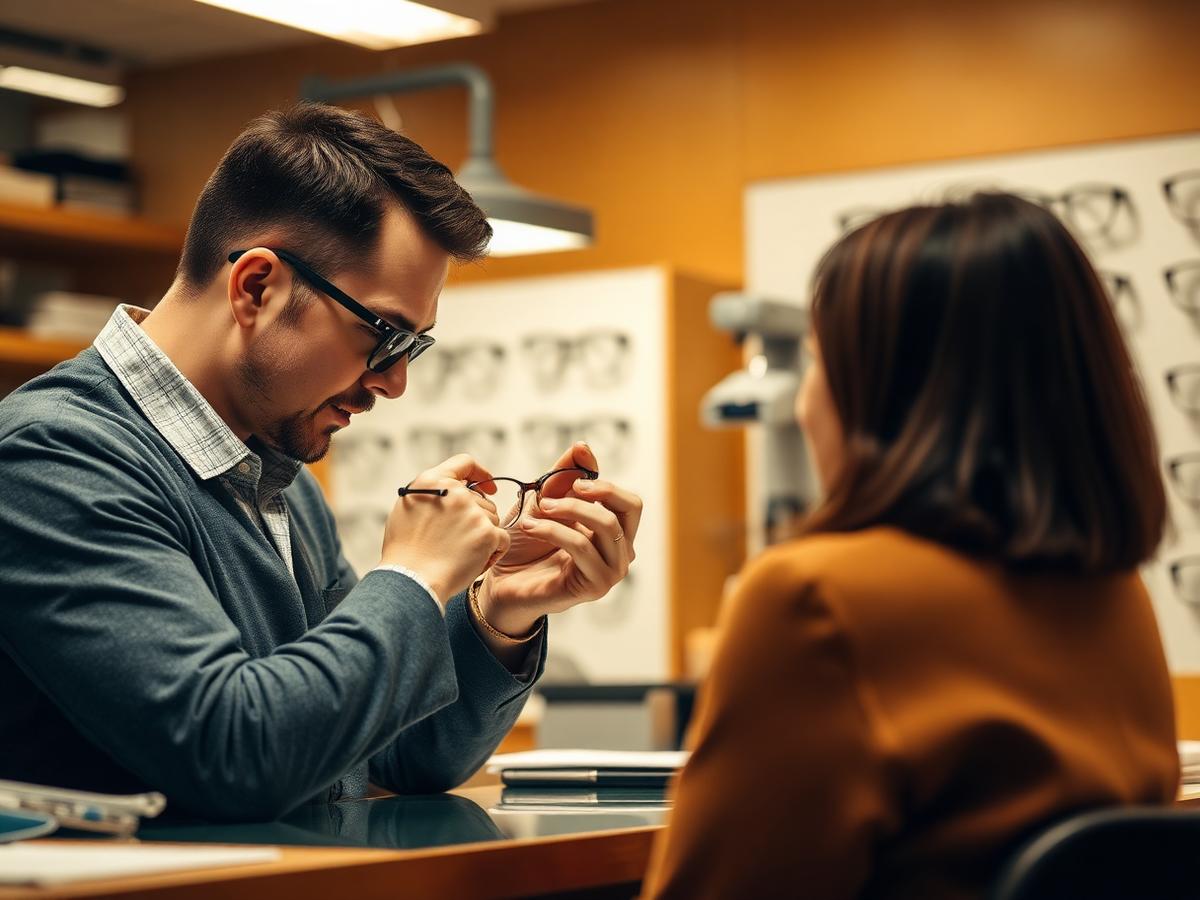
Bring in the glasses and every loose piece. An optician looks at them while you wait, tells you whether the frame can be saved, and does most repairs on the spot. Any brand, bought anywhere. Adjustments and screw or nose pad replacements are free. Walk in seven days a week, no appointment needed.
A frame that has been sat on, dropped, or worn loose over a few years is usually out of alignment rather than broken. Hinges loosen, screws back out, nose pads harden, and the rims relax their grip on the lenses. Each of those is a bench job, and an optician can do most of them in minutes.
Some frames are past saving. A plastic front snapped at the bridge, a crack running through a hinge post, or a frame someone has already glued will not hold a repair for long. When that is what you have, we say so before any work starts and show you what new lenses in a different frame would cost, so you decide with real numbers.
You do not need to have bought the glasses here. Frames from another optical shop, a department store, or an online retailer get the same look and the same answer.
A wobbly arm is usually a screw that backed out or a hinge that lost tension, and both are quick fixes. A hinge pulling away from the frame front takes longer but often holds. A metal arm snapped clean can sometimes be soldered. A plastic arm broken through rarely can, and we tell you that up front.
Glasses that were sat on or slept on distort more often than they break. We straighten the front, true the arms, then fit the frame back to your face. A frame that is straight but sits low still puts you looking through the wrong part of the lens, so the fitting is part of the repair.
Screws, silicone nose pads, and temple tips for most common frames are stocked and swapped on the spot. Replacing a screw or a nose pad is free. Parts specific to one manufacturer are ordered, which usually takes about 7 to 10 days.
Pad arms, temple curves, and the bend behind the ear all adjust. A frame that slides down when you read, pinches at the bridge, or sits higher on one side can nearly always be brought back rather than replaced.
A lens that will not stay in points to a stretched rim, a loose eyewire screw, or a lens edged slightly small for the frame. We reseat it and check the tension on both sides, since the other lens is often close behind.
Prescription and non-prescription sunglasses get the same hinge, screw, and alignment work as eyeglasses. If your prescription changed and you like the frame, it can often be reglazed with new lenses, once we check that the frame will survive having the old ones taken out.
Small faults are cheaper early. A hinge left loose for a month wears out the screw thread, and a two-minute tightening turns into a part that has to be ordered.
Come in during business hours with the glasses and anything that fell off, including the screw if you found it. Skip home fixes first. Glue is hard to remove, damages lens coatings, and turns a repairable frame into one that is not.
Hinges, screws, rim tension around the lenses, pad arms, and any stress marks in the material. This takes a minute or two and tells us whether the problem is the part you noticed or something underneath it.
What is wrong, whether it can be fixed, how long it takes, and what it costs, before any work starts. If the honest answer is that a repair will not last, you hear that instead.
Screws, nose pads, temple tips, and alignment are done at the bench while you wait. When a part has to be ordered, it usually takes about 7 to 10 days.
The glasses go back on your face and get leveled, because a repair is only finished when they sit where they should. Straight on the counter and crooked on you is not a repair.
Bring them in today, or call (310) 305-2950 and describe what broke, and we'll tell you whether it's a while-you-wait fix.
Metal frames are the most forgiving. Hinges can be replaced, arms can sometimes be soldered, and a bent front can usually be trued. Acetate and other plastics can be reshaped with heat but do not take a clean break well, and a crack near the bridge or the hinge post tends to reopen under normal wear. A frame that has already been glued is the hardest, because the adhesive has to come off before anything can be done properly. If a repair will fail within weeks, the better answer is new lenses in a different frame, and you see the cost of both.
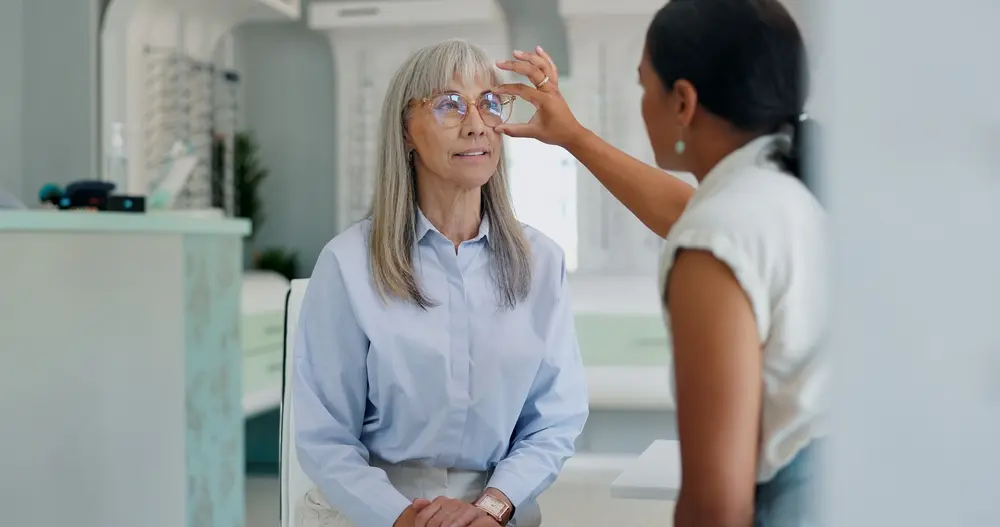
Each lens has an optical center that is meant to sit in front of your pupil. When a frame twists, that center moves with it, which is why glasses that were sat on can leave you with eye strain or a headache even though the prescription has not changed. Straightening the frame is half the job. The rest is setting it back on your face, leveling the front, and resetting the temple curves and pad angles, and that is the part a mail-in service cannot do.

Adjusting the fit, and replacing a screw or a nose pad, are free. Most other repairs cost $20 to $60. A broken arm or hinge is $60 and takes about 7 to 10 days. Glasses bought somewhere else are repaired at the same prices, and you hear the price before any work starts. New lenses or a replacement frame are quoted as a purchase and can use your vision benefit where you have one.
Vision plans cover lenses and frames on a schedule, not repairs, so most repairs are paid out of pocket and are small. Where a plan matters is when the answer is new lenses or a new frame, and we check your benefit before quoting that.
Lenses bought here carry a two-year warranty, no questions asked, when they have anti-glare coating. Questions about a repair or a bill: (310) 305-2950.
Doctor of Optometry since 1994, with certificates in the treatment and management of ocular disease and of glaucoma.
Residency in pediatrics, vision therapy, and neuro-optometric rehabilitation. Glaucoma certified, licensed in California and Washington.
UC Berkeley Doctor of Optometry with a residency in ocular disease. Glaucoma and therapeutic pharmaceutical agent certified.
Office Hours
| Monday | 10:00am – 6:00pm |
| Tuesday | 10:00am – 6:00pm |
| Wednesday | 10:00am – 6:00pm |
| Thursday | 10:00am – 6:00pm |
| Friday | 10:00am – 6:00pm |
| Saturday | 10:00am – 6:00pm |
| Sunday | 11:00am – 4:00pm |
Adjusting the fit and replacing a screw or a nose pad are free. Most other repairs are $20 to $60, and a broken arm or hinge is $60 with a turnaround of about 7 to 10 days. Glasses bought elsewhere cost the same to repair. New lenses or a new frame are quoted as a purchase. You hear the price before any work starts.
Usually. Most broken arms can be fixed, case by case, and the repair is $60 with about 7 to 10 days’ turnaround. It depends on how it broke rather than how bad it looks. An arm loose at the hinge or a sheared screw is routine. A hinge pulling away from the frame front is often repairable. A metal arm snapped clean can sometimes be soldered, while a plastic arm broken through rarely holds afterward. Bring every piece in and an optician will tell you which one you have.
For a screw, a pad, a hinge, or an alignment, a repair costs a fraction of a new pair and takes minutes. Replacement wins when the frame front is cracked, the plastic has gone brittle, or your prescription is out of date anyway, because you would be paying for new lenses regardless. We price both when it is close, so you decide with the numbers in front of you.
Yes. An optician’s bench, the kind found in an independent optometry office, handles most frame repairs on the spot. Modo Optometry in Marina del Rey repairs glasses and sunglasses from any brand or store, seven days a week. Mail-in services exist for rare parts, but they mean days without your glasses and no fitting at the end.
Yes. Frames from another shop, a chain store, or an online retailer get the same look, the same answer, and the same prices. The one limit is parts: a hinge or temple made for a specific brand we do not carry can take longer to source, and we tell you that before you decide.
No. Walk in during business hours, Monday through Saturday 10am to 6pm and Sunday 11am to 4pm. If you would rather call ahead, (310) 305-2950 reaches the front desk, and we can tell you whether the part you need is likely in stock.
Screws, nose pads, temple tips, and adjustments take a few minutes, and most people wait. Larger repairs and anything that needs an ordered part take about 7 to 10 days. New lenses in your own frame are a lab order with its own turnaround.
Often, yes. The frame has to be in good enough condition to survive having the old lenses removed, which is the main risk with older plastic frames, and your prescription has to be current. We check both before taking the order and tell you if the frame is a poor bet. The practice cannot take responsibility if an older frame breaks while the lenses are changed, though that is rare.
Yes. Prescription and non-prescription sunglasses get the same hinge, screw, nose pad, and alignment work as eyeglasses. Scratched or cracked sunglass lenses are replaced rather than repaired, and we can quote that for most frames.
Tightening a screw with a proper eyeglass screwdriver is fine. Beyond that, no. Household pliers bend frames in ways that are hard to reverse, and glue makes a repairable break much harder to fix and can damage lens coatings. Bring the glasses and any loose pieces in as they are.
Sometimes, and it comes down to the material. A clean break in a metal bridge can occasionally be soldered. A plastic bridge broken through almost never holds, and the better answer is your existing lenses in a similar frame, if they are in good shape. Bring all the pieces in and an optician will tell you which you have.
For many frames, yes. Generic temple tips, nose pads, and screws fit most frames and are stocked. A full replacement arm has to match the frame’s hinge, so it is ordered from the manufacturer, which works for current models and is harder for discontinued ones. We check availability before you commit to waiting.
An optician looks at them while you wait and tells you exactly what they need. Modo Optometry, Marina del Rey, open seven days. Call (310) 305-2950.