Dry eye is a tear problem, and there are two kinds: eyes that do not make enough tears, and eyes whose tears evaporate too fast because the oil glands in the lids are blocked. They feel the same and are treated differently, which is why drops from the drugstore help some people and do nothing for others. The exam finds out which you have.
Burning, grittiness, redness, eyes that water when the wind hits them, vision that clears when you blink and blurs again a second later. Most people try artificial tears for months before they are seen, and most of them have evaporative dry eye, where the problem is not a shortage of tears but a shortage of the oil that keeps tears from drying off the eye.
That oil comes from glands along the edge of the eyelid, and when they clog, no amount of added water fixes the evaporation. Treatment for that kind targets the lids. Treatment for the other kind, too few tears, targets production and keeps the tears you have on the eye longer. Getting the type right is the whole job of the first visit.
Dry eye is managed rather than cured. The aim is a plan you can keep up with that takes the symptoms down and keeps them down, and a doctor who adjusts it when your life changes, from a new job on screens to a new medication.
When it burns, what makes it worse, how many hours on screens, whether you wear contacts, which medications you take. Antihistamines, some blood pressure drugs, and acne treatments all dry the eye, and the history often names the cause before any test does.
Under the slit lamp, a drop of dye shows how quickly the tear film breaks up after a blink. A film that collapses in a few seconds is the signature of evaporative dry eye.
The doctor presses gently along the lid margin to see whether the glands release clear oil, thick paste, or nothing. Blocked glands are the most common cause of chronic dry eye and the one most often missed.
A strip of paper or a measured dye tells whether the eye is producing enough tears at all. Low volume points to the aqueous-deficient type and to a different set of treatments.
Dye highlights dry patches and damaged cells on the cornea and conjunctiva, which is how the doctor grades how far the dryness has gone and whether a contact lens is making it worse.
Allergies, blepharitis, a lid that does not close fully, and some autoimmune conditions all mimic dry eye. The exam rules them in or out so the treatment fits the actual problem.
Any of these lasting more than a few weeks is worth an exam, especially if drops have stopped helping.
How it feels, when it started, your screen hours, contact lens wear, medications, and anything that has helped or made it worse. This part is longer than you expect because it narrows the cause.
Tear break-up time, tear volume, dye on the surface, and a close look at the lid margins and glands under magnification. None of it hurts and it takes a few minutes.
Evaporative, aqueous-deficient, or mixed, and what is driving it in your case. You see the glands and the surface on the screen and hear what the doctor is seeing.
Treatment starts at the lowest step that fits your type and your symptoms, with a written routine to take home. Prescription treatment or plugs are added when the exam says they are needed, not as a default.
A recheck in four to eight weeks to measure what changed and adjust. Dry eye drifts with seasons, screens, and medication, so the plan is revisited rather than set once.
Tired of drops that stop working? Book a dry eye evaluation online or call (310) 305-2950.
Preservative-free artificial tears on a schedule rather than when it hurts, a warm compress and lid cleaning every day to loosen blocked glands, screen breaks, and a look at any medication that dries the eye. For mild dry eye this is often enough, and it stays in place under every later step.
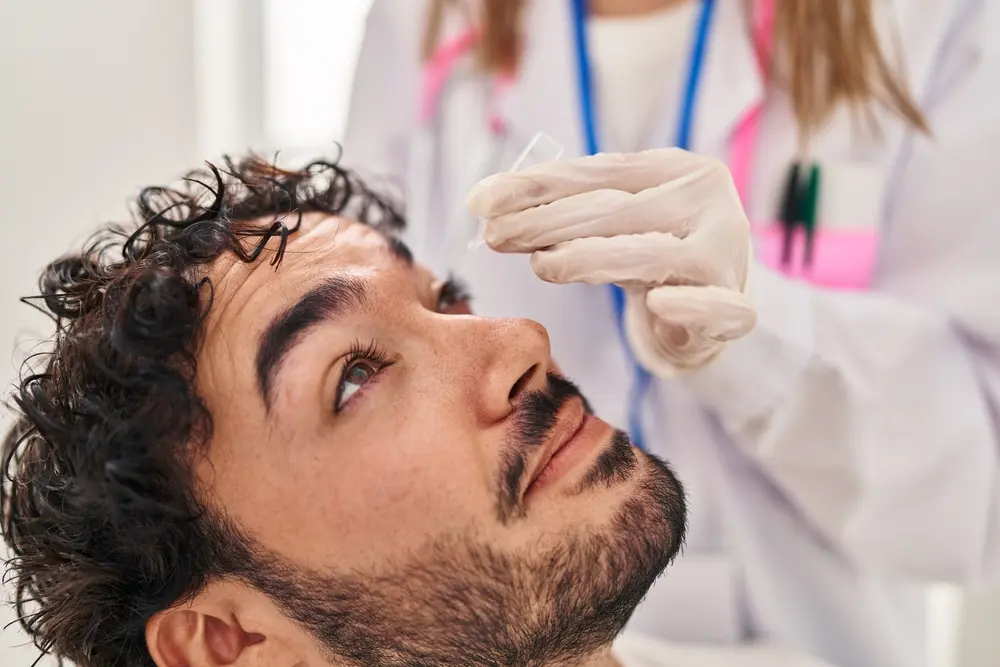
Prescription drops that calm inflammation on the surface of the eye so tears can do their job, a short course of antibiotic for inflamed lids, and tiny silicone plugs placed in the tear ducts to keep the tears you have on the eye longer. The American Academy of Ophthalmology lists each of these as a standard option, and the doctor chooses by type.
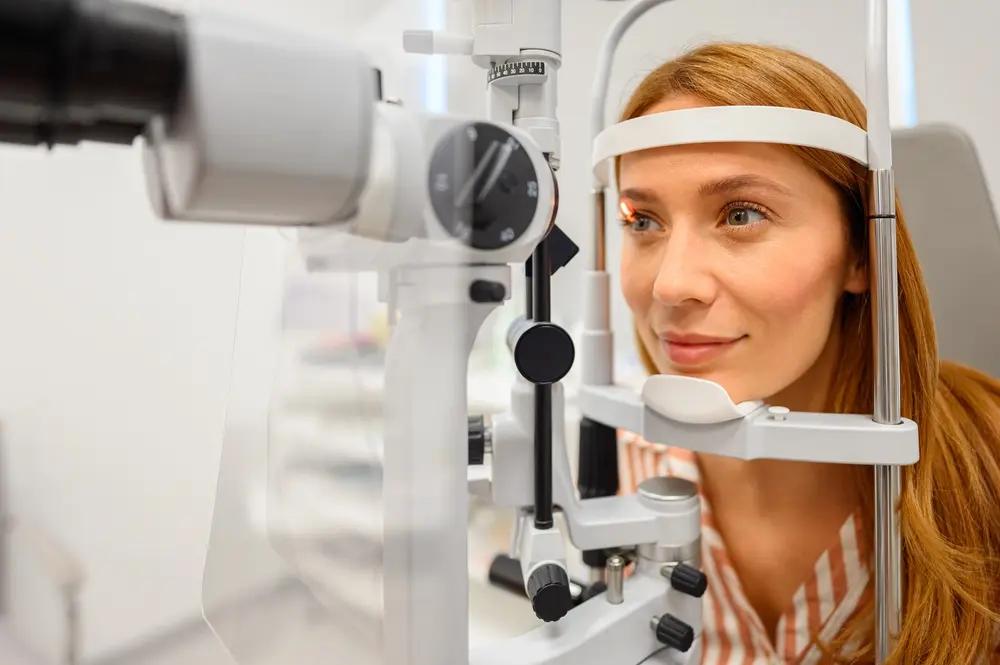
For blocked oil glands that do not respond, in-office treatments that warm and clear the glands or use light therapy on the lids. For severe cases, drops made from your own blood serum or a cornea specialist's care. Where a treatment is not done in our office, the doctor refers you directly and keeps managing the rest of the plan.

Preservative-free tears used at set times keep the surface wet before it dries out. Waiting until it burns means treating damage that has already happened.
Ten minutes of real warmth on closed lids softens the oil in blocked glands, and a gentle lid scrub afterward clears the openings. Done daily, it is the single most effective habit for evaporative dry eye.
Blink rate drops by half on a screen. Every twenty minutes, look at something far away for twenty seconds and blink fully a few times. Lower the monitor so you look slightly down and the lids cover more of the eye.
A humidifier by the bed, the car vents aimed away from your face, wraparound sunglasses in wind, and a break from contact lenses on bad days. Small changes that stop tears evaporating faster than the eye can replace them.
A dry eye evaluation is a medical visit, because dry eye is a diagnosed condition, so it bills to medical insurance rather than to a vision plan, with that plan's copay. The same is true of follow-ups. Vision plans cover routine exams and eyewear only.
Call (310) 305-2950 with your medical plan name and the front desk will tell you what to expect. If dry eye comes up during a routine exam, the doctor will explain how a separate medical visit is billed before anything is scheduled.
Doctor of Optometry since 1994, with certificates in the treatment and management of ocular disease and of glaucoma.
Residency in pediatrics, vision therapy, and neuro-optometric rehabilitation. Glaucoma certified, licensed in California and Washington.
UC Berkeley Doctor of Optometry with a residency in ocular disease. Glaucoma and therapeutic pharmaceutical agent certified.
Office Hours
| Monday | 10:00am – 6:00pm |
| Tuesday | 10:00am – 6:00pm |
| Wednesday | 10:00am – 6:00pm |
| Thursday | 10:00am – 6:00pm |
| Friday | 10:00am – 6:00pm |
| Saturday | 10:00am – 6:00pm |
| Sunday | 11:00am – 4:00pm |
An optometrist is the right first stop. Dry eye is diagnosed with a slit lamp, dye, and a look at the oil glands, and most of it is managed with drops, lid care, prescription treatment, and plugs, all of which are handled in an optometrist’s office. Severe or unusual cases are referred to a cornea specialist, and the optometrist keeps managing the rest.
Not enough tears, and tears that evaporate too fast. The first is aqueous-deficient dry eye, where the lacrimal glands underproduce. The second, evaporative dry eye, is more common and comes from blocked oil glands in the eyelids, so the tear film has no oil layer to hold it on the eye. Many people have some of both.
Do not use redness-relief drops daily; they constrict blood vessels and rebound. Do not rub your eyes. Do not sleep in contact lenses or wear them through a flare. Do not aim a fan or car vent at your face, and do not sit through hours of screen work without blinking breaks. Do not keep using a drop that has stopped helping; that is the signal to be examined.
A preservative-free artificial tear, a few slow full blinks, and a warm compress on closed eyes for ten minutes take the edge off most flares. Relief that lasts needs the cause treated: for blocked glands that means daily lid warming and cleaning, and for inflammation it means prescription drops.
Often, yes, in the sense that symptoms can be brought down to little or nothing and kept there. Dry eye from a medication, a contact lens, or screen habits can resolve when the cause changes. Chronic dry eye from gland dysfunction is managed rather than cured, but managed well it stops interfering with your day.
Allergic conjunctivitis, blepharitis, a lid that does not fully close in sleep, and the early stage of an infection all produce similar burning and grittiness. The reverse happens too: watery eyes are often dry eyes, because an irritated eye over-produces thin tears that run off. The exam separates them.
Recent options target the oil glands and inflammation directly: in-office treatments that warm and clear blocked glands, light-based therapy for the lids, newer prescription drops, and a nasal spray that stimulates natural tear production. The American Academy of Ophthalmology lists these among current treatments. Whether any applies depends on your type, which is what the evaluation establishes, and the doctor refers out for anything not done in our office.
An irritated, dry surface triggers reflex tearing, which floods the eye with thin, watery tears that lack oil and run straight off. The watering is a symptom of dryness, not the opposite of it, and treating the dryness is what stops it.
Usually, once the dry eye is under control. A daily disposable lens or a different material often fixes afternoon scratchiness on its own. During a flare, a break from lenses helps the surface recover. The doctor will say when lenses are safe to go back in.
Screens do not cause the disease, but they make it worse: blink rate falls by about half when you concentrate on a screen, so tears evaporate before the next blink replaces them. Someone with mild gland dysfunction who then works eight hours on a monitor gets symptoms they would not have had otherwise.
No referral. Book a dry eye evaluation directly, or raise the symptoms at a routine exam and the doctor will schedule the evaluation. Bring a list of your medications and any drops you have been using, including the ones that did not work.
No. Dry eye is a medical condition, so the evaluation and follow-ups bill to medical insurance, like a visit to a physician, with that plan’s copay. Vision plans cover routine exams and eyewear. Call (310) 305-2950 with your plan name and the front desk will explain what to expect.
Book a dry eye evaluation at Modo Optometry, seven days a week in Marina del Rey. Call (310) 305-2950 or book online.