Something wrong with your eye today? Call us first. We keep time open for urgent visits and can usually see you the same day.
An eye problem that appeared suddenly deserves attention the same day rather than next week. Pain, a foreign body sensation, new redness, light sensitivity, or a change in vision are all reasons to pick up the phone. Our front desk will ask a few short questions and tell you what to do next, which is often to come straight in.
Calling first matters. It lets us make room in the schedule, prepare the right room, and know what we are looking at before you arrive. It also lets us tell you the small number of situations where an emergency department is the safer place to go, and give you instructions for the drive over rather than after you get here.
When you arrive, an optometrist evaluates the eye directly, explains what is going on in plain language, and discusses what happens next with you. If the issue needs care beyond our office, we arrange it and stay in the loop rather than handing you a phone number. Follow-up is scheduled before you leave whenever it is appropriate.
Eye pain that starts abruptly, whether sharp or aching, is worth evaluating the same day rather than waiting to see if it settles. Tell us when it started, whether anything happened just before, and whether light makes it worse when you call.
New blur, a shadow, a curtain across part of your sight, double vision, or a sudden increase in floaters or flashes all warrant prompt attention. These are the calls we prioritize, and the front desk will tell you immediately where to go.
A red, watery, or sticky eye can come from several very different causes, and they are not treated the same way. Being seen means the cause is identified rather than guessed at, which matters if one eye has already passed it to the other.
Something in the eye, a scratch, a blow to the eye area, or an accident at work all need looking at directly. Do not rub the eye, and do not try to remove anything embedded. Call us on the way and we will tell you what to do in the meantime.
Splashes, fumes, welding flash, and intense light exposure are urgent. Flushing the eye with clean water for several minutes usually comes first, and severe chemical exposure belongs in an emergency department — call and we will tell you which applies.
A lens that will not come out, or an eye that becomes red and painful during lens wear, should be seen quickly. Take the lens out if you can, keep it, and bring the case and solution with you so we can see exactly what was being used.
Not every eye problem is an emergency, but the ones below are worth a phone call the same day. If you are unsure, call anyway — the front desk would rather triage it than have you wait it out.
The front desk asks what happened, when it started, whether vision has changed, and whether there was any injury or exposure. That short conversation decides how quickly we see you, what to do before you arrive, and in rare cases whether an emergency department is the safer option.
We take a focused history rather than a full routine workup: the timeline, what you have already tried, your medications, whether you wear contact lenses, and any relevant medical history. Bring your lenses or their case, your glasses, and a medication list if you have one to hand.
We measure vision in both eyes and check what is needed for the situation, which may include eye pressure. These baseline numbers matter both for deciding what to do now and for comparing at follow-up, since improvement or deterioration is easier to judge against something recorded.
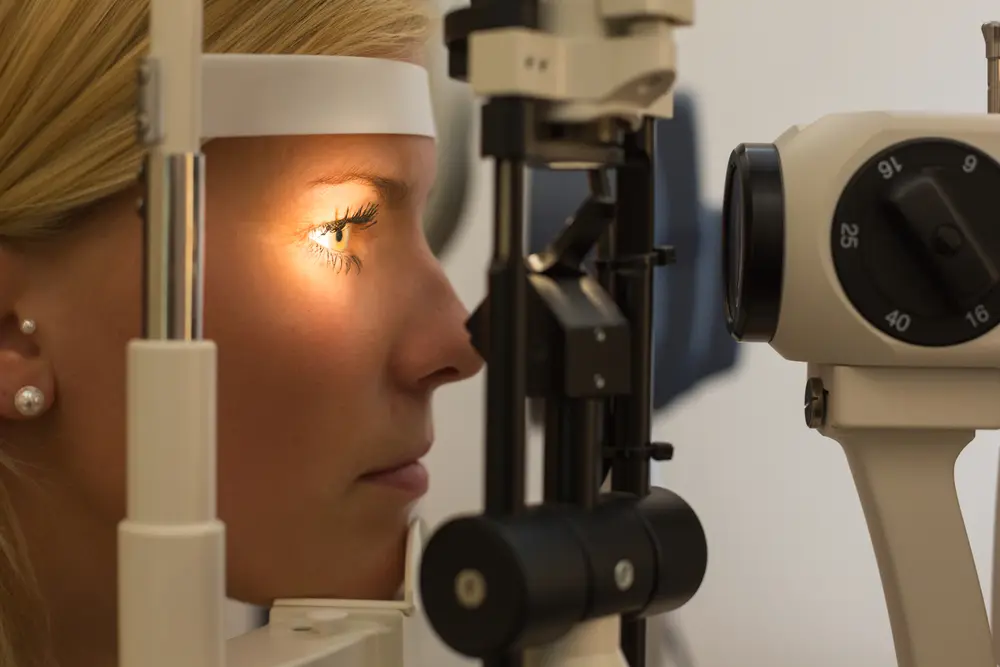
The optometrist examines the front of the eye under the slit lamp and, where the situation calls for it, looks inside the eye as well. The goal is to identify what is actually happening rather than to treat a symptom, because similar complaints can have very different causes.
We explain the findings in plain language, discuss what happens next, and agree on it with you. If another specialty needs to be involved we arrange the referral and stay in contact. When a recheck is appropriate, it is scheduled before you leave rather than left to you.
If something is wrong with your eye today, call us — we keep time open for urgent visits.
Urgent eye problems are not all equally urgent, and the fastest way to sort that out is a short conversation. Our front desk asks a set of specific questions and escalates to a doctor when the answers call for it, so the response matches the situation rather than the order of the queue. That call also tells you what to do in the meantime — flush the eye, remove the lens, leave it alone — and, in the small number of cases where a hospital is the right place, sends you there immediately instead of after a wasted trip.
Eye problems are frightening partly because they are hard to see for yourself. So we spend time on the explanation: what the examination found, what it means, what to watch for over the next day or two, and which changes should bring you straight back. You leave with instructions you can actually follow and a clear threshold for calling us again. Where care beyond our office is needed, we make the arrangements and follow up, rather than handing over a referral and losing track of the outcome.
We accept VSP, EyeMed, Heritage, Blue Shield, and Medicare. For urgent visits, we check your coverage as quickly as possible and explain your expected copay or deductible. Out-of-network patients are welcome and receive itemized paperwork for reimbursement.
We do not delay urgent care over paperwork. If you need to be seen today, come in and our front desk will sort out benefits alongside your visit rather than before it. Where a follow-up or additional testing carries a separate cost, you get an estimate before it is scheduled. Questions about a statement? Call (310) 305-2950 and ask for the front desk.
Comprehensive eye care with a focus on ocular disease management and specialty contact lens fittings.
Comprehensive exams for all ages, dry eye treatment, and pediatric myopia management.
Board-certified optometrist with residency training in ocular disease and a focus on preventive, patient-centered care.
Office Hours
| Monday | 10:00am – 6:00pm |
| Tuesday | 10:00am – 6:00pm |
| Wednesday | 10:00am – 6:00pm |
| Thursday | 10:00am – 6:00pm |
| Friday | 10:00am – 6:00pm |
| Saturday | 10:00am – 6:00pm |
| Sunday | 11:00am – 4:00pm |
Call us first for most eye problems — pain, redness, a foreign body sensation, sudden vision changes, or a minor injury. Go straight to an emergency department for a serious chemical splash, a deep or penetrating injury, an object embedded in the eye, or an eye problem alongside a head injury. If you are unsure, call and the front desk will tell you which applies.
Call before you come in. We keep time open for urgent visits, but calling lets us make room in the schedule, prepare the right room, and give you instructions for the meantime. Walking in without calling still gets you seen, but there may be a wait behind patients already booked, and there are a few situations where we would have redirected you.
Usually the same day, and often within a couple of hours during office hours. How quickly depends on what you describe on the phone; genuine vision changes and injuries take priority over problems that have been going on for a week. If we cannot fit you in soon enough for the situation, we will tell you where to go instead of leaving you waiting.
Follow the instructions the front desk gives you on the phone, since they depend on what happened. As a general rule: do not rub the eye, do not try to remove anything embedded in it, take a contact lens out if you can and keep it, and bring your glasses, lens case and solution, and a list of your medications. For a chemical splash, flush with clean water first.
Often yes. Surface foreign bodies are a common reason patients call, and the optometrist can examine the eye closely and address most of them in the office. Do not attempt it yourself, and do not rub the eye, as both can make matters worse. If what we find needs care beyond our office, we arrange it the same day.
Call the office and follow the instructions on the message, which cover what to do outside opening hours. For a serious injury, a chemical splash, or a sudden loss of vision, do not wait for us to open — go to an emergency department. For less severe problems, call as soon as we open and tell the front desk it started overnight so we can prioritize it.
Call and describe what happened. We see children for urgent eye concerns, and the front desk will tell you whether to come in or go to a pediatric emergency department, which depends on the injury and your child’s age. Either way you get an answer on the phone rather than having to decide alone, and we can follow up afterward.
Yes. If what we find needs a specialist or a procedure we do not perform, we arrange the referral, share the examination findings, and stay involved in the follow-up rather than handing over a phone number. We also update your primary care physician when the situation calls for it, so the people treating you are working from the same information.
Call us first and we will tell you exactly what to do. Urgent visits are usually seen the same day.