An optometrist is a doctor of optometry (OD) who gives eye exams, writes prescriptions for glasses and contact lenses, and diagnoses and manages many eye conditions, while an ophthalmologist is a medical doctor (MD or DO) who went through medical school and surgical training and performs eye surgery.
People call both of them eye doctors, and for a routine exam the National Eye Institute says either one is a good choice. The two part ways on training, and on what happens once a problem needs an operation. A third title, the optician, fills the prescription and is not a doctor at all.
What Is an Optometrist?
An optometrist is a primary eye care provider who has earned a doctor of optometry degree. According to the American Optometric Association, optometrists find, treat and follow eye diseases and disorders over time, on top of checking vision.
The route to the degree runs through college and then optometry school. According to the American Academy of Ophthalmology, an optometrist finishes two to four years of college followed by four years of optometry school. Cleveland Clinic notes that some optometrists then add a one-year residency.
What Does an Optometrist Do?
An optometrist examines your eyes, measures your prescription, and looks for disease in the front and back of the eye. What an optometrist can prescribe includes:
- Glasses
- Contact lenses
- Medication for eye conditions
Optometrists also diagnose common vision problems such as lazy eye, astigmatism, presbyopia, nearsightedness, farsightedness and double vision. The American Optometric Association adds vision therapy to that work, along with advice on surgical and nonsurgical options.
Is an Optometrist a Doctor?
Yes, an optometrist is a doctor, but a doctor of optometry rather than a medical doctor. Optometrists earn their OD at a school of optometry, not a medical school. The American Academy of Ophthalmology makes the same point, noting that the OD degree is the reason optometrists are called eye doctors.
The American Optometric Association points out that Medicare recognizes doctors of optometry as physicians.
What Is an Ophthalmologist?
An ophthalmologist is a physician, either an MD or a DO, who specializes in the eyes and vision. The American Academy of Ophthalmology counts 12 to 14 years of education in all: a college degree, then medical school, then at least four years of medical and surgical training. Cleveland Clinic says those last years start with a one-year internship, followed by specialized training in eye care.
Some ophthalmologists go further with a fellowship of a year or two and become subspecialists, focusing on one area such as the retina, glaucoma, the cornea or children’s eyes.
What Can an Ophthalmologist Do That an Optometrist Cannot?
Surgery is the main thing an ophthalmologist does that an optometrist usually does not. The National Eye Institute notes that an ophthalmologist may offer treatments, surgery among them, that optometrists do not. Cleveland Clinic names these among the conditions that call for an ophthalmologist’s surgery or specialized care:
- Cataracts and glaucoma
- A detached retina
- Diabetes-related retinopathy
- Diseases of the cornea
- Eyes that do not line up (strabismus)
- Serious eye injuries
On the edges of surgery the sources do not agree, so here is each one’s answer. Cleveland Clinic says most optometrists do not perform surgery. The American Optometric Association says doctors of optometry perform certain surgical procedures. The American Academy of Ophthalmology says ophthalmologists are the one group of eye care providers with the training to safely perform delicate eye surgery.
Can an Optometrist Prescribe Medication?
Yes, optometrists prescribe medication for eye conditions, though what they are licensed to do differs from one state to the next. The National Eye Institute lists prescribing medicines among the things both optometrists and ophthalmologists can do, and the American Optometric Association says the same. The American Academy of Ophthalmology describes it more narrowly, saying that whether an optometrist may prescribe for a given eye disease depends on the state.
At Modo Optometry in Marina del Rey, the optometrists diagnose urgent eye problems under magnification and prescribe the drops or medication the eye needs.
Can an Optometrist Diagnose Eye Disease?
Yes, an optometrist can diagnose eye disease, including glaucoma, cataracts, macular degeneration, retina problems and eye infections. The American Optometric Association notes that a comprehensive eye exam with an optometrist can find disease in people who came in with no symptoms.
Where the two kinds of doctor differ is what comes after the diagnosis. If the condition needs an operation, the optometrist will typically refer you to an ophthalmologist.
What Is an Optician?
An optician fits glasses and contact lenses from a prescription that an optometrist or ophthalmologist wrote, and does not diagnose or treat eye conditions. The National Eye Institute is direct about it: opticians are not doctors. An optician helps you choose frames and lenses, fits them, and can adjust or replace them later.
The rules for becoming an optician vary by state.
Optometrist vs Ophthalmologist vs Optician
The table below sets the three side by side.
| Optometrist | Ophthalmologist | Optician | |
|---|---|---|---|
| Degree | Doctor of optometry (OD) | Medical doctor (MD or DO) | Not a doctor |
| Training | 2 to 4 years of college, then 4 years of optometry school | 4 years of college, 4 years of medical school, at least 4 more years of training | Varies by state; often a technical degree |
| Eye exams | Yes | Yes | No |
| Glasses and contact lens prescriptions | Writes them | Writes them | Fills and fits them |
| Diagnoses eye disease | Yes | Yes | No |
| Prescribes medication | Yes, within state limits | Yes | No |
| Eye surgery | Most do not | Yes | No |
Should I See an Optometrist or an Ophthalmologist?
For a routine eye exam, glasses or contacts, the National Eye Institute says either an optometrist or an ophthalmologist is a good option. For serious eye problems, and for surgery, it suggests an ophthalmologist may be the better choice.
Not every source agrees on the routine visit. The American Academy of Ophthalmology recommends a comprehensive medical eye exam with an ophthalmologist even for someone who only needs vision correction. The American Optometric Association calls doctors of optometry the country’s primary eye health care providers. Each group speaks for its own profession.
The National Eye Institute lists the signs that it is time to see an eye doctor of either kind:
- Another doctor has told you to get a dilated eye exam
- Your glasses or contacts no longer bring things into focus
- An eye looks red or swollen, hurts, or your sight has gone blurry
- You think something may be wrong with your eyes or your vision
A few problems should skip the office altogether. Modo Optometry sends a cut or punctured eye, or sudden loss of vision, to the emergency room first. A red, painful or suddenly blurry eye can be seen the same day here through same-day urgent visits.
How Do Optometrists and Ophthalmologists Work Together?
Optometrists and ophthalmologists commonly work together through referrals: an optometrist finds a problem during an exam and sends the patient on to an ophthalmologist when surgery is needed. Some practices have both kinds of doctor under one roof.
At Modo Optometry, an eye that needs a surgeon leaves with a direct referral. The practice also offers co-management for cataract surgery and LASIK. Glaucoma testing is done here, and patients who need it are referred for ongoing management.
What Kind of Eye Doctor Is at Modo Optometry?
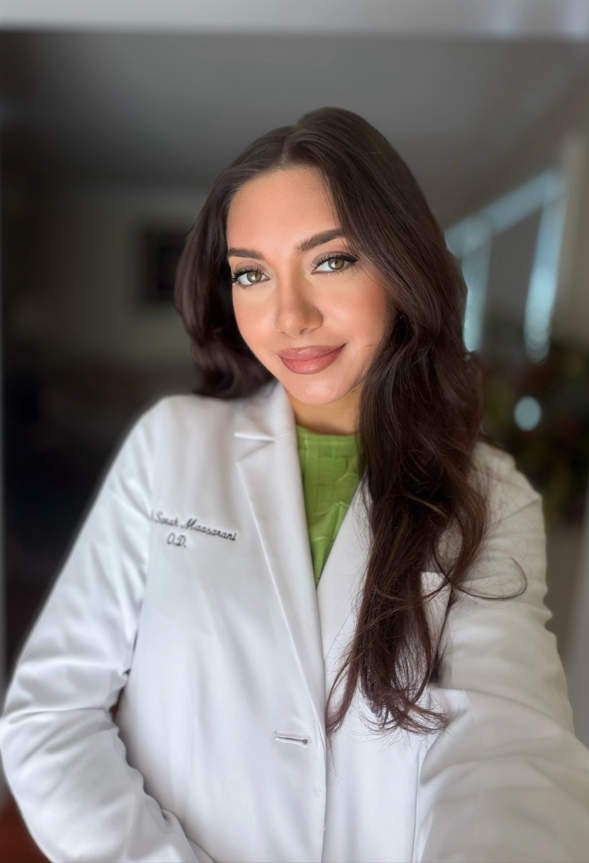
The doctors at Modo Optometry are optometrists. The practice has three doctors of optometry: Dr. Shahrokh Dayyani, a Doctor of Optometry since 1994; Dr. Kayla Ueda, who completed a residency in pediatrics, vision therapy and neuro-optometric rehabilitation; and Dr. Sarah Maasarani, who completed a residency in ocular disease at the UC Berkeley School of Optometry.
A comprehensive eye exam here measures your prescription, checks the pressure inside the eye, and examines the front and back of each eye under magnification. Children are seen from age 3, and Dr. Ueda sees the youngest patients, 5 and under. The office is open seven days a week in Marina del Rey and is in network with VSP, EyeMed, Blue Shield and Medicare.
Frequently Asked Questions
What Does OD Mean?
OD stands for doctor of optometry, the degree an optometrist earns after optometry school.
Do Optometrists Go to Medical School?
No, optometrists go to optometry school instead of medical school, which is why their degree is an OD rather than an MD. The OD takes four years of optometry school, usually after college.
What Is Ophthalmology?
Ophthalmology is the medical specialty of eye and vision care, and the physicians who practice it are ophthalmologists.
Can an Optometrist Diagnose Cataracts?
Yes, an optometrist can diagnose cataracts. If a cataract needs surgery, an ophthalmologist does the operation.
Can an Ophthalmologist Prescribe Contacts?
Yes, an ophthalmologist can prescribe and fit both glasses and contact lenses, according to the American Academy of Ophthalmology.
What Services Does an Ophthalmologist Perform?
An ophthalmologist can handle the full range of eye care, from routine exams and glasses or contact lens prescriptions to medication, treatment of eye disease, and surgery.