Have FSA money left for 2026? Many plans expire Dec 31. Use it on an eye exam, glasses or contacts. Book now
Contact lens discomfort is a lens that stings, burns, feels dry or gritty, or makes the eye red. Take the lens out and wear your glasses. Common causes are dry eye, deposits, the solution, or a lens that no longer fits, but pain, light sensitivity, or blurred vision can mean an infection. At Modo Optometry in Marina del Rey, a lens wearer with pain or redness is seen the same day, seven days a week. Call (310) 305-2950.
Contacts feel uncomfortable when something is wrong with the lens, the way it sits on the eye, the solution it is stored in, or the tears underneath it. A healthy eye with a lens that fits and is cared for properly should feel comfortable.
The common reasons are a lens that is old, damaged, or fits poorly, protein deposits that build up on the surface, a reaction to a chemical in the cleaning or storing solution, and dry eye. Wearing lenses for long periods is one of the causes of dry eye.
Some reasons are more serious. The most common infection in lens wearers is keratitis, an infection of the cornea; a severe case can leave a scar that blurs vision. Pain that gets worse, even after the lens is out, is one of its warning signs.
A lens worn past its replacement date, a torn lens, or one that does not fit can rub and irritate the eye. Worn too long or fitted badly, a lens can scrape the cornea or lead new blood vessels to grow into it, and both can harm sight. Lenses can warp and the cornea can change shape, so a lens that once fit may not fit now.
Proteins from your tears build up on the lens, and some people react to them. Others are sensitive to chemicals in the cleaning or storing solution. Either one can make the eye red and burning soon after the lens goes in.
A healthy tear film is what lets a lens sit comfortably. When tears run short, lenses feel dry and scratchy, and long-term lens wear can itself contribute to dry eye.
With giant papillary conjunctivitis, the lining under the upper lid turns red and swollen and develops bumps. Soft lens wearers get it most, sometimes after years of wearing lenses without trouble. It tends to bring itching, extra mucus, and a lens that slides upward with each blink.
Keratitis, an infection of the cornea, is more likely when lenses are slept in, worn too long, or not cleaned and stored correctly, or when water gets on them. Signs include a red, irritated eye, pain that gets worse even after the lens is out, light sensitivity, sudden blur, and discharge.
A lens can scratch the surface of the cornea, which makes the eye painful and watery. Allergies can also make lenses uncomfortable, and allergy sufferers are more likely to develop giant papillary conjunctivitis.
Take the lens out if any of these start, and see an eye doctor; the last five need one right away.
Take the lens out and bring it and its case to the visit, and do not put another lens in until you have been seen.
It starts with what happened, when it started, and the lens you wear.
Vision is checked in each eye.
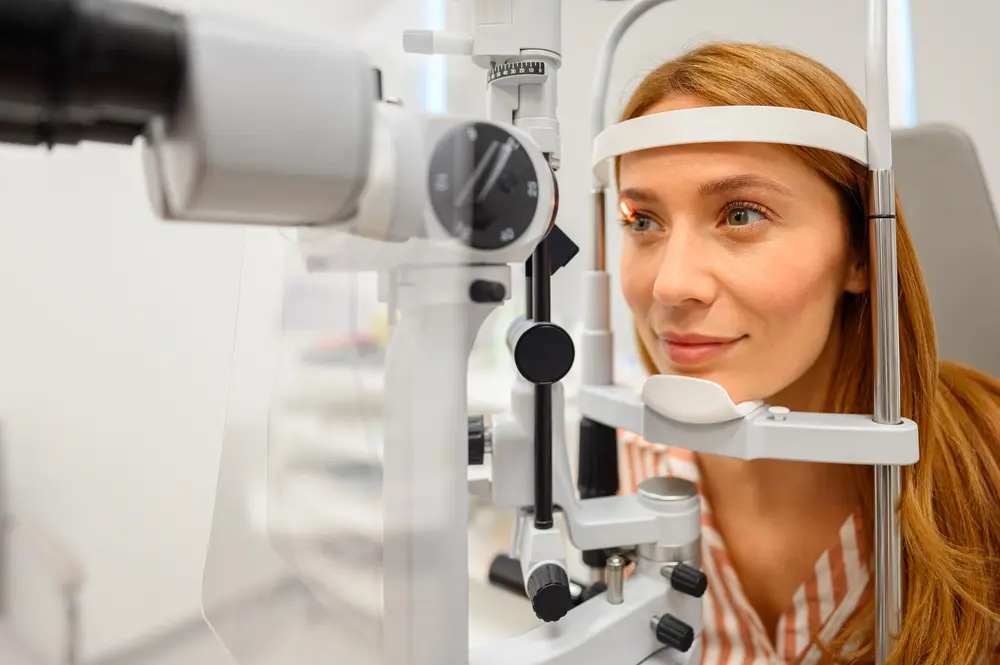
Under the slit lamp, the doctor looks at the cornea and the lid. A yellow dye shows scratches and ulcers under blue light.
If the lens or its fit is the problem, the next step can be a refit or a change of lens type once the eye has settled.
Contact lens hurting? Take it out and call (310) 305-2950. Same-day visits, seven days a week.
Treatment depends on the cause. The first step is the same for all of them: take the lenses out, wear your glasses, and do not force a lens that hurts. Milder problems such as an allergy may clear up with a break from lenses or with eye drops prescribed by an eye doctor. Giant papillary conjunctivitis usually means a spell without lenses, shorter wearing hours, prescription drops, and sometimes a new lens type or a preservative-free solution. An infection needs prompt treatment from an eye doctor. When the lens itself is the cause, a refit or a change of lens type may help. Dry, scratchy lenses can be a dry eye problem, and dry eye can be treated.

If your vision blurs, the eye leaks discharge, light hurts, or the eye turns very red, painful, or watery, take the lenses out and see an eye doctor right away. Those can be signs of an infection. Pain, light sensitivity, or redness in a contact lens wearer is treated as an infection until proven otherwise. Milder discomfort that keeps coming back is also worth an exam, since the fit, the lens type, or your tears may have changed. Modo Optometry sees a lens wearer with pain or redness the same day during business hours, seven days a week; call (310) 305-2950. If the office is closed and the eye can wait until morning, keep the lens out, do not rub the eye, and call when we open; a red, painful eye that cannot wait needs an eye doctor or medical care right away.

A visit for a red or painful eye in a lens wearer is a medical visit. It bills to your medical insurance, not to a vision plan, with that plan's copay and possibly a deductible.
Medicare and Blue Shield are in network for medical eye care. Bring your medical insurance card and a photo ID.
Plan not in network, or no insurance? You leave with an itemized bill, which an out-of-network plan may partly reimburse. Call (310) 305-2950 and ask before you come in.
Doctor of Optometry since 1994, with certificates in the treatment and management of ocular disease and of glaucoma.
Residency in pediatrics, vision therapy, and neuro-optometric rehabilitation. Glaucoma certified, licensed in California and Washington.
UC Berkeley Doctor of Optometry with a residency in ocular disease. Glaucoma and therapeutic pharmaceutical agent certified.
Office Hours
| Monday | 10:00am – 6:00pm |
| Tuesday | 10:00am – 6:00pm |
| Wednesday | 10:00am – 6:00pm |
| Thursday | 10:00am – 6:00pm |
| Friday | 10:00am – 6:00pm |
| Saturday | 10:00am – 6:00pm |
| Sunday | 11:00am – 4:00pm |
Take the lenses out and wear your glasses until the eye feels normal. If it does not settle, or if there is pain, redness, or blurred vision, see an eye doctor before wearing lenses again. Keeping discomfort from coming back means a lens that fits, replacing lenses and cases on schedule, cleaning them the way your eye doctor recommends, and never sleeping in lenses unless your eye care provider says you can.
A lens that was comfortable and suddenly is not may be torn or damaged, coated with deposits, reacting with a new solution, or sitting on an eye that has become dry or allergic. It can also be an infection. Take the lens out; if the eye still does not feel right after the lens is out, or it hurts, see an eye doctor.
Pain with lenses can come from a poor fit, a damaged lens, deposits, a reaction to the solution, a scratch on the cornea, or an infection. Pain is treated as a sign of infection until an eye doctor has looked, so take the lens out and get the eye checked.
A lens that fits should feel comfortable. Do not keep wearing a lens that hurts: take it out and have the eye and the fit checked.
Without the lens, the surface of the eye is suddenly open to the air and has to readjust, and some people feel a brief gritty sensation. If it lingers, the tears or the lens fit may be to blame. Pain that keeps going or gets worse after removal can be an infection and needs an eye doctor.
It can be an infection, a swollen cornea, protein deposits, a reaction to chemicals in the solution, or a lens that is torn or fits badly. Take the lens out, wear glasses, and get the eye checked.
No. Keep tap water and sterile water away from your lenses, rinse and store them only in fresh solution, and empty the case rather than topping up old solution. Saline and rewetting drops do not disinfect a lens.
Glasses. Leave the lenses out until an eye doctor tells you it is safe to wear them again. Keep a pair of glasses with your current prescription with you, in case the lenses have to come out.
An eye doctor: an optometrist or an ophthalmologist. Modo Optometry’s three doctors all fit contact lenses and see urgent visits; a lens wearer with pain or redness is seen the same day. Call (310) 305-2950.
Call Modo Optometry at (310) 305-2950 and come in the same day, seven days a week during business hours. Take the lens out, bring it and its case, wear your glasses, and bring your medical insurance card.