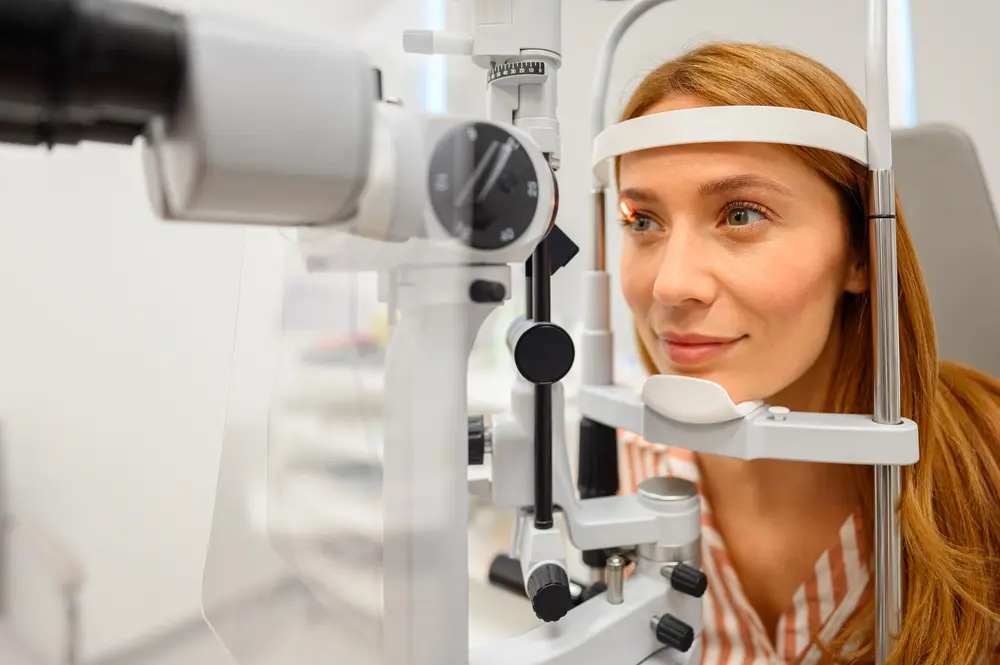
A diabetic eye exam checks the retina, the back of the eye, for damage from diabetes before it affects your sight. Diabetic retinopathy usually has no symptoms early on, so the National Eye Institute recommends a yearly dilated eye exam for most people who have diabetes. Modo Optometry offers diabetic eye exams seven days a week.
A diabetic eye exam is a full eye exam centered on the harm diabetes can do inside the eye. Over time, high blood sugar can harm the fine vessels supplying the retina, the layer at the back of the eye that senses light. That damage is diabetic retinopathy, and it is the most common cause of vision loss in people with diabetes. The exam also looks for two other problems diabetes makes more likely: cataracts and open-angle glaucoma.
The reason to come in before anything feels wrong is that the early stages of diabetic retinopathy rarely announce themselves. Some people notice vision that blurs and clears, or trouble reading, but many notice nothing until the disease has progressed. Found early, it can be watched closely.
Two of the doctors at Modo Optometry bring disease training to it. Dr. Sarah Maasarani completed a residency in ocular disease, and Dr. Shahrokh Dayyani holds certificates in the treatment and management of ocular disease and of glaucoma.
How clearly each eye sees, far away and up close. Shifts in blood sugar can change your focus, and retinopathy can make reading or distance vision harder, so a change here is worth explaining.
The retina and the optic nerve are examined under magnification. When the doctor needs a wider view of the retina, dilating drops are used and you are told first. Dilation is one way eye doctors check for diabetic retinopathy.
The pressure inside each eye is measured. Diabetes raises the risk of open-angle glaucoma, which damages the optic nerve slowly and often without symptoms.
The clear lens behind the pupil is checked for clouding. Cataracts are more common with diabetes, and tend to appear earlier in life.
Photographs of the retina, available as an add-on, and some insurance plans cover it. Ask at booking or at the visit.
What the doctor found, explained in plain language, and when to come back. That may be a year, or sooner if changes are found.
Anyone with diabetes, of any type. The timing of the first exam depends on the type.
Bring your glasses or contact lenses, your medical insurance card, and a list of your medicines. Bring sunglasses too, in case your eyes are dilated.
Tell the doctor which type of diabetes you have, how long you have had it, and any changes you have noticed in your vision.
Each eye is checked for clarity at distance and up close, and the pressure inside each eye is measured.
The doctor examines the retina under magnification. If dilating drops are used, you are told first; after dilation, near vision stays blurry and light feels bright for a few hours.
The findings explained, with a date for your next exam. If something is found that needs a specialist, you leave with a referral.
Book your diabetic eye exam online, or call (310) 305-2950.
Over years, high blood sugar alters the vessels serving the retina until some close off and others seep fluid or blood; the eye then sprouts weak replacement vessels prone to bleeding. Fluid that leaks into the macula, the center of the retina, blurs central vision; this is diabetic macular edema. Among adults of working age, the CDC ranks diabetic retinopathy first among causes of blindness.

Yes. In its early stages an eye doctor usually monitors it, sometimes with exams every few months. In later stages, treatment such as injections, laser, or surgery can keep vision from getting worse. Keeping blood sugar, blood pressure, and cholesterol in range lowers the risk. If your exam finds something that needs a specialist, you leave with a referral.

A diabetic eye exam is usually a medical visit, so it bills to medical insurance rather than a vision plan, with that plan's copay and possibly a deductible. For people with diabetes, Medicare Part B covers one retinopathy exam a year, subject to the Part B deductible and coinsurance.
Medicare and Blue Shield are in network for medical eye care. Bring your medical insurance card and a photo ID, and the front desk confirms which plan applies before your visit.
Plan not in network, or no insurance? You leave with an itemized bill, which an out-of-network plan may partly reimburse. Call (310) 305-2950 and ask before you come in.
Doctor of Optometry since 1994, with certificates in the treatment and management of ocular disease and of glaucoma.
Residency in pediatrics, vision therapy, and neuro-optometric rehabilitation. Glaucoma certified, licensed in California and Washington.
UC Berkeley Doctor of Optometry with a residency in ocular disease. Glaucoma and therapeutic pharmaceutical agent certified.
Office Hours
| Monday | 10:00am – 6:00pm |
| Tuesday | 10:00am – 6:00pm |
| Wednesday | 10:00am – 6:00pm |
| Thursday | 10:00am – 6:00pm |
| Friday | 10:00am – 6:00pm |
| Saturday | 10:00am – 6:00pm |
| Sunday | 11:00am – 4:00pm |
The tests overlap, but a diabetic eye exam centers on the retina and its blood vessels, where diabetes does most of its damage, and it is usually billed to medical insurance rather than a vision plan. A routine exam focuses on your prescription and general eye health.
They need a thorough one, regularly. The National Eye Institute recommends a yearly dilated eye exam for most people with diabetes, because retinopathy can be present with no symptoms. The interval can change with your results.
Dilation can leave you with blurred vision and glare for a few hours, and the National Eye Institute suggests that someone else drive you home. If you know you will be dilated, plan a ride and bring sunglasses.
An eye doctor, either an optometrist or an ophthalmologist. Medicare pays for the yearly exam when the doctor is licensed in your state to perform it.
At least once a year for most people with diabetes. If diabetic retinopathy is found, the gap between visits may shorten.
Often none at first. As it advances, people may notice faded colors, more floaters, trouble seeing at night, blank patches, or sight that blurs and then clears. Any sudden change in vision is a reason to call your eye doctor right away.
They are different tests. Dilating drops widen the pupil so the doctor can see inside the eye; retinal imaging photographs the retina. The doctor decides at the visit what your eyes need. Retinal imaging is available here as an add-on, and some insurance plans cover it.
Yes. If you have diabetes, Part B covers one exam a year that checks for diabetic retinopathy, subject to the Part B deductible and coinsurance. Modo Optometry is in network with Medicare.
Yes. High blood sugar can blur vision by changing the lens of the eye, separate from any damage to the retina. That is one reason vision can shift when blood sugar does.
Once your blood sugar has been stable for a while. The American Academy of Ophthalmology advises about a week of good control before a glasses exam, since a prescription taken while sugar levels swing may not suit you once they settle.
The biggest lever is the diabetes itself: keeping blood sugar in a healthy range, controlling blood pressure and cholesterol, staying active, and not smoking. Yearly exams catch changes early.
Book online or call (310) 305-2950 with your plan name, and the front desk confirms which plan applies before your visit.
Seven days a week in Marina del Rey, with Medicare and Blue Shield accepted. Book online or call (310) 305-2950.