A child who has never seen clearly does not know it, and a school screening checks distance sight and little else. A pediatric eye exam tests how your child's eyes focus, track, and work together, whether a prescription is needed, and whether the eyes are healthy, using methods that need no reading and no right answers. Tell us your child's age when you book and the visit is planned around it.
Most of what a child learns in a classroom comes through the eyes, and a child with a vision problem usually has no idea. They assume everyone sees the way they do. A pediatrician's screening or a school chart checks whether the eyes see far away; it does not test how they focus up close, whether they work as a pair, or whether one eye is quietly doing all the work.
Those are the problems that show up as a child who loses their place reading, rubs their eyes after homework, tilts their head, or avoids close work altogether. They are also the ones that respond best when caught early. The American Optometric Association recommends a first exam at around six months, another between three and five, one before first grade, and yearly after that.
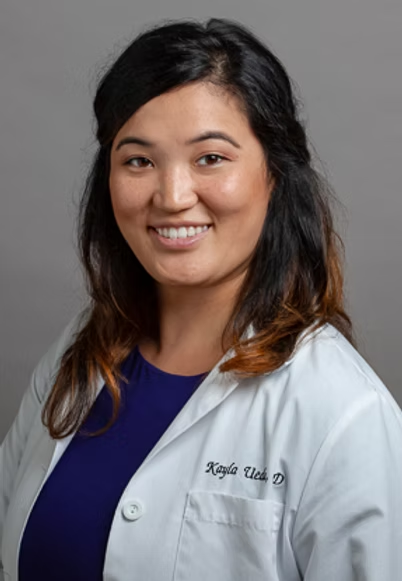
Dr. Kayla Ueda completed a residency in pediatric optometry, vision therapy, and neuro-optometric rehabilitation, and the exam is built for the age of the child in the chair: pictures and shapes instead of letters, objective measurements where a toddler cannot answer, and a plain explanation for the parent at the end.
Letters for readers, pictures and shapes for younger children, and for infants and toddlers a test of how the eyes respond to and follow targets. One eye is checked at a time, because a child with one strong eye will not notice a weak one.
Eye teaming, tracking, and focusing are what reading depends on. A child whose eyes do not converge comfortably on a page sees words swim, skips lines, and tires fast. These are tested with simple games rather than questions.
A child cannot tell you which lens is clearer, so the prescription is measured objectively, often with drops that relax the focusing muscle, since a child's eyes can hide farsightedness by working harder. The drops wear off in a few hours.
A turned eye, or one that the brain has started to ignore, is treated far more successfully before about age seven. The exam checks alignment at distance and near and compares the two eyes, because this is the condition most worth catching early.
The front and back of each eye are examined under magnification. Eye disease in children is uncommon, which is exactly why it is looked for, and a child's exam also screens for the conditions that run in families.
Myopia tends to appear in the school years and climb through the teens. Measuring it every year shows how fast it is moving, and the doctor discusses the options for slowing that progression when the numbers call for it.
Children rarely say they cannot see. These are the things parents and teachers notice instead.
Tell us your child's age when you book so the right time is set aside. Bring any glasses they wear, a note of anything a teacher or pediatrician mentioned, and your family's eye history. Explain to your child that the doctor will play some looking games.
Birth history, milestones, school and screen habits, and what you or a teacher has noticed. For children this part carries more weight than it does for adults.
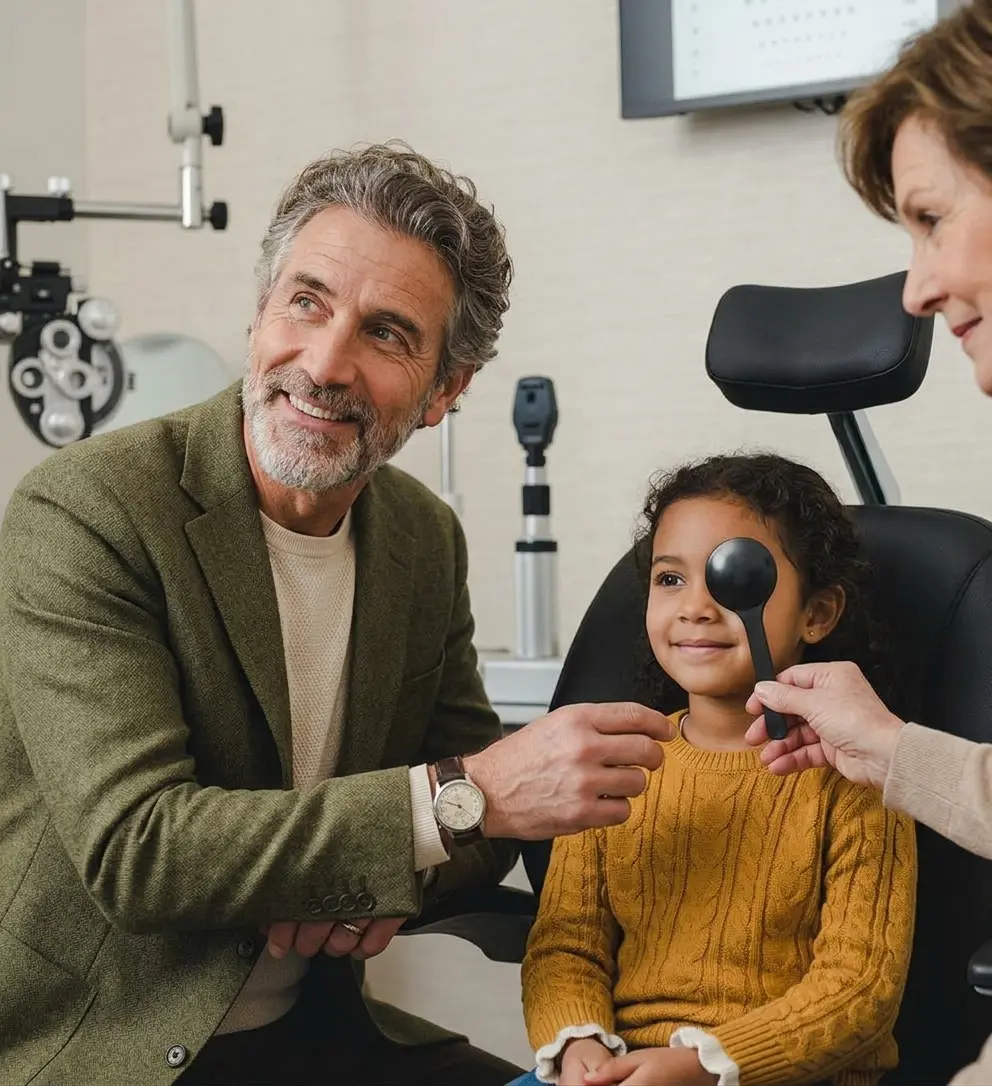
Vision is checked with pictures, shapes, or letters depending on age, one eye at a time. Eye teaming, tracking, focusing, and depth perception are tested with targets and simple tasks. Nothing requires a right answer, and the doctor adjusts the pace to the child.
The prescription is measured objectively, often after drops that relax focusing, which makes the result reliable in a child. The eyes are examined under magnification. The drops blur near vision for a few hours and make light feel bright; bring sunglasses.
What was found, what it means for school and play, and what happens next: glasses, a recheck, a watch on nearsightedness, or nothing until next year. If treatment such as vision therapy is needed, the doctor explains the options and the path to it.
Book your child's exam online, or call (310) 305-2950 and tell us their age.
The first exam is recommended at around six months. A baby cannot answer questions, so the doctor watches how each eye fixes on and follows a target, checks that the eyes are aligned, measures the need for a prescription with a light and lenses, and examines the health of the eye. It is short, and nothing hurts.
At this age the exam uses pictures and shapes, matching games, and tests of depth perception and eye teaming. This is the window in which a lazy eye or a turned eye is most treatable, and the visit before kindergarten is the one that catches it. The American Optometric Association recommends at least one exam between three and five.
Letters on the chart, reading-distance testing, and a close look at focusing and tracking, because this is where reading problems and homework headaches come from. Nearsightedness is measured every year to see how fast it is changing. Teens who want contact lenses are evaluated for them here.
Children do not compare their vision to anyone else's. A child with one weak eye sees fine with both open and never mentions it, and a farsighted child reads by working the focusing muscle hard and calls the resulting headache a dislike of reading. The signs that reach a parent are behavior: avoidance, squinting, losing their place. The exam is how you find the cause before it becomes a school problem.
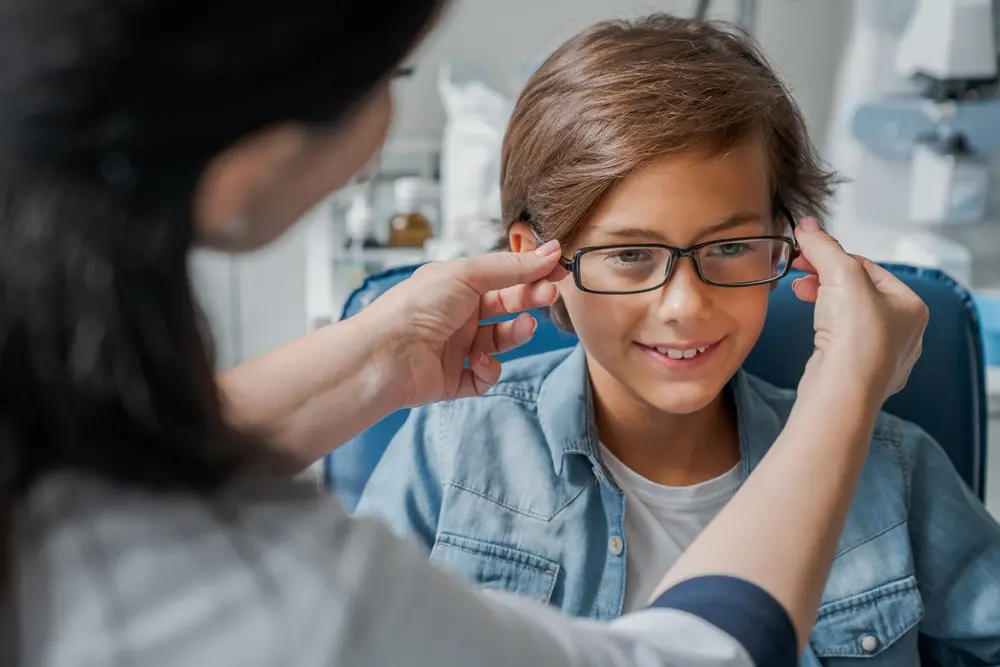
The visual system is still wiring itself through early childhood. A lazy eye treated at four usually recovers; the same eye found at ten may not. A turned eye, a large difference between the two eyes, or high farsightedness all have a window, and the exam before kindergarten is the one that falls inside it. That is why the schedule starts at six months rather than at the first complaint.

A routine child's exam bills to a vision plan, and most plans cover one a year for dependents, often with a frame benefit for children's glasses. A visit for a specific problem, a turned eye, an infection, an injury, is a medical visit and bills to medical insurance instead. Call (310) 305-2950 with your plan name and the front desk will tell you what is covered before you book.
Bring your child's vision plan card and your medical card; which one applies depends on the reason for the visit.
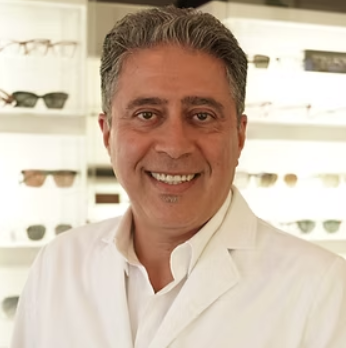
Doctor of Optometry since 1994, with certificates in the treatment and management of ocular disease and of glaucoma.
Residency in pediatrics, vision therapy, and neuro-optometric rehabilitation. Glaucoma certified, licensed in California and Washington.
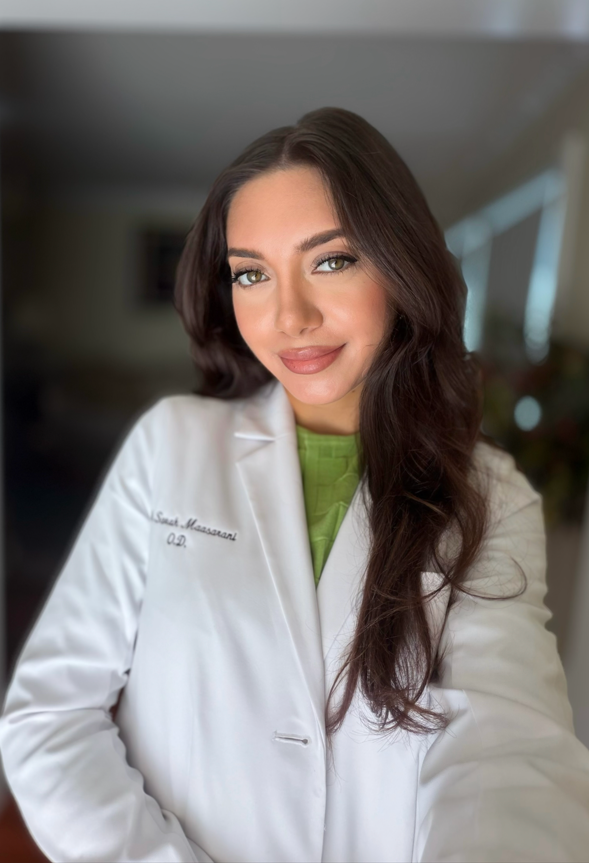
UC Berkeley Doctor of Optometry with a residency in ocular disease. Glaucoma and therapeutic pharmaceutical agent certified.
Office Hours
| Monday | 10:00am – 6:00pm |
| Tuesday | 10:00am – 6:00pm |
| Wednesday | 10:00am – 6:00pm |
| Thursday | 10:00am – 6:00pm |
| Friday | 10:00am – 6:00pm |
| Saturday | 10:00am – 6:00pm |
| Sunday | 11:00am – 4:00pm |
The American Optometric Association recommends a first exam at around six months, another between ages three and five, one before first grade, and yearly after that. Earlier or more often if a parent needed glasses young, the child was born early, or anyone has noticed an eye turning or a child squinting. Tell us your child’s age when you book.
Yes. Optometrists can complete residency training in pediatric optometry after their doctorate, covering children’s vision development, binocular vision, and vision therapy. Dr. Kayla Ueda completed a residency in pediatrics, vision therapy, and neuro-optometric rehabilitation, and children’s exams here are planned around the age of the child.
For routine exams, glasses, lazy eye, eye teaming problems, and nearsightedness, an optometrist, and especially one with pediatric training. An ophthalmologist is a surgeon, and a child is referred when the problem is surgical: a turned eye that needs an operation, a blocked tear duct that does not clear, a cataract, or an injury. If that is what the exam finds, you leave with a direct referral.
Without asking them to read. The doctor watches how each eye fixes on and follows a toy, uses pictures and matching games where the child can play along, checks alignment with a light, and measures the prescription objectively by shining a light through lenses and reading the reflection. A toddler’s exam is a series of short games, and the doctor adapts to the child’s attention.
Yes, and they are worth doing, but a screening checks distance sight and sometimes alignment, usually with one chart and no lenses. It does not test focusing, eye teaming, tracking, or the health of the eye, and it misses farsightedness, which children hide by focusing harder. A pass at the pediatrician is not a reason to skip the exam.
Yes. Any optometrist examines children, and what matters is whether the exam is adapted to the child’s age and whether the doctor is comfortable with the tests that need no reading. Here that is the case; a doctor with pediatric residency training sees children, and the exam is paced to the child.
Refractive error, meaning nearsightedness, farsightedness, or astigmatism, which glasses correct. After that, lazy eye, where the brain favors one eye, and a turned eye. Nearsightedness is the one rising fastest, and it tends to progress through the school years, which is why it is measured yearly.
No. Book directly online or by phone. If your pediatrician or a school screening recommended the exam, bring the note; it tells the doctor what to look at first.
Usually it means a prescription or an alignment issue was found, and at one year both are very treatable. Depending on what it is, the plan may be glasses, patching the stronger eye for part of the day, a recheck in a few months, or a referral to a pediatric ophthalmologist if it is surgical. The doctor explains exactly what was found and why the plan is what it is.
Often, yes, because drops that relax the focusing muscle give a reliable prescription in a child, whose eyes can otherwise compensate and hide farsightedness. You are told before the drops go in. Near vision is blurry and light feels bright for a few hours afterward, so bring sunglasses and plan a quiet afternoon.
Tell them the doctor has some looking games and will shine a small light in their eyes, and that nothing will hurt. Book at a time of day when they are rested and fed. Bring any glasses they wear and anything a teacher has mentioned. If you want the exam without drops on the first visit, say so when you book and the doctor will explain the trade-off.
Most vision plans cover one routine exam a year for each dependent and often a frame benefit for children’s glasses. A visit for a specific problem bills to medical insurance instead. Call (310) 305-2950 with your plan name and the front desk will tell you what applies.
Seven days a week in Marina del Rey, with a doctor trained in pediatric optometry. Book online or call (310) 305-2950.