Have FSA money left for 2026? Many plans expire Dec 31. Use it on an eye exam, glasses or contacts. Book now
Red eyelids usually mean the lid is inflamed, and blepharitis, a stye, or a reaction to something that touched the skin are among the usual reasons. Many cases are kept under control with warm compresses and daily lid cleaning. Swelling that comes with fever, a bulging eye, or pain when the eye moves needs medical help right away. At Modo Optometry in Marina del Rey, red or swollen eyelids are seen the same day during business hours, seven days a week. Call (310) 305-2950 first; the front desk will tell you whether to come in or go to the emergency room instead.
Eyelids turn red when they are inflamed, and one of the most common reasons is blepharitis, an inflammation of the lids that usually sits along the edge where the lashes grow. It often leaves flaky, dandruff-like crusts at the base of the lashes.
Blepharitis is not the only cause. A stye or a chalazion can redden part of the lid, a cosmetic or skin product can set off an allergic or irritant skin reaction, rosacea can reach the eyes, and an infection of the lid or the skin around the eye, called cellulitis, can make the whole area red and swollen.
Most of these are uncomfortable rather than dangerous, and blepharitis rarely does lasting harm to the eye. Cellulitis is the exception: an infection there needs a doctor and antibiotics.
Many eye and eyelid problems look alike, so guessing at the cause is a poor plan. The treatment for an irritated lid margin, a reaction to mascara, and an infection under the skin is different, and an exam of the lids is what tells them apart.
Blepharitis is inflammation of the lids, most often from too many of the bacteria that normally live on the skin, or from oil glands in the lids that clog. The lids turn red, puffy, and itchy, and crusts gather along the lashes. In some people an overgrowth of tiny mites called Demodex, which live in the lash follicles, is part of the cause.
A stye is a sore, red bump that forms when an oil gland in the lid blocks. A chalazion is a firm lump that usually does not hurt; it also starts with a blocked gland, often follows a stye that lingered, and can leave the lid red and puffy. Both are more common in people who have blepharitis.
Contact dermatitis is a skin reaction: the spot a substance touched turns red and sore. Fragrances and hair products are among the common triggers, and an allergic reaction can show up a day or two after contact rather than straight away.
Allergies are one of the conditions that can inflame the lids and bring on blepharitis.
Rosacea, dandruff of the scalp and brows, seborrheic dermatitis, and oily skin all raise the risk of blepharitis. Rosacea can affect the eyes themselves, a form called ocular rosacea, with red, burning eyes and red, swollen lids at the base of the lashes, sometimes with no rosacea on the skin at all.
Preseptal cellulitis is an infection of the eyelid and the skin around the eye; it can follow a scratch, a wound, or an insect bite, or spread from the sinuses, and it is more common in young children. Orbital cellulitis reaches the eye socket, can make the eye bulge or stop moving properly, and is serious.
Red eyelids rarely come alone. These are the signs that tend to travel with them; the last one needs medical help right away.
The doctor asks when the redness started, how quickly it came on, whether it itches, burns, or hurts, and whether you have allergies, a skin condition, or have started a new medicine, supplement, cosmetic, or skin product.
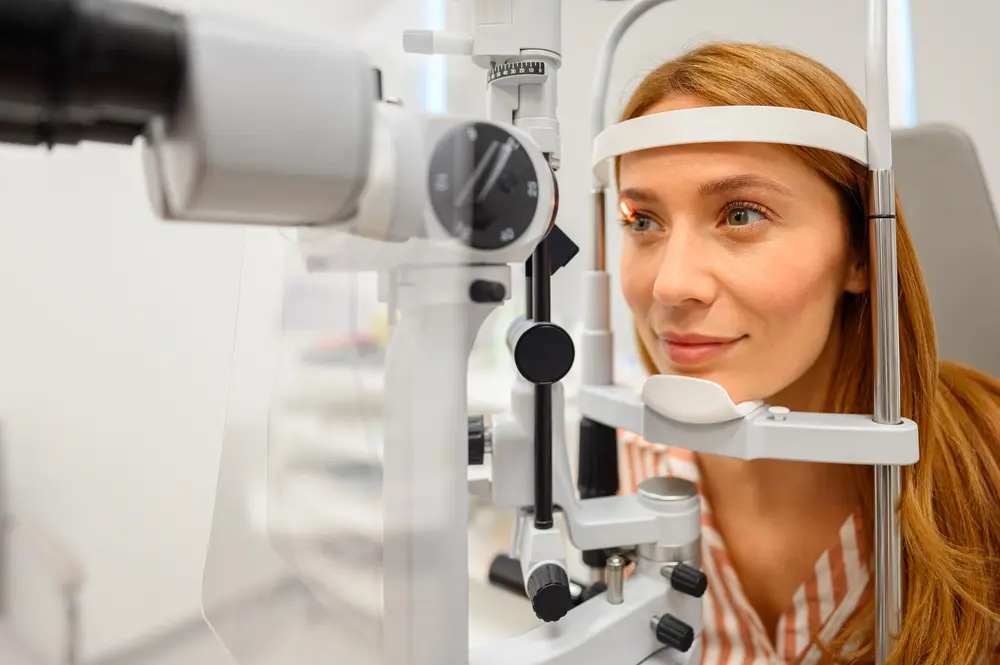
Under the slit lamp, the doctor looks closely at the lids, the lash line, and the oil gland openings with bright light and magnification, checking for crusts, clogged glands, and the waxy collars at the base of the lashes that can point to mites.
The exam helps tell blepharitis apart from other causes of red lids, which can look alike at first glance.
Vision and the surface of the eye are checked too, because lid inflammation can lead to dry eye and, in severe cases, harm the cornea.
You leave with written instructions for care at home and for when to come back.
Red, swollen eyelids? Call (310) 305-2950. Same-day visits, seven days a week.
Eyelid redness is treated by treating its cause. With blepharitis, daily lid cleaning that clears away the crusts does most of the work. Hold a clean washcloth soaked in warm water on the closed eyes; the warmth softens the crusts and keeps the glands along the lid flowing, then gently rub along the base of the lashes with a cotton swab or soft cloth dipped in warm water mixed with a little baby shampoo, or with a lid cleanser made for blepharitis, and rinse. Use a light touch on the lids, with no hard scrubbing and no rubbing of the eyes. Blepharitis rarely clears for good, so the routine becomes a daily habit that keeps flare-ups down. When cleaning is not enough, an eye doctor may prescribe an antibiotic ointment, drops, or pills, or steroid eye drops to calm redness and swelling, and artificial tears can ease dryness. If rosacea or dandruff is behind it, treating that condition helps the lids as well. With ocular rosacea, skip the redness-relief drops meant for bloodshot eyes; they can make the symptoms worse. A reaction to a product settles once the product is found and set aside, so take a break from eye makeup while the lids heal. Cellulitis is treated with antibiotics. At Modo Optometry, the doctor diagnoses the problem under magnification and prescribes the drops or medication it needs; if the eye needs a surgeon, you leave with a direct referral.

See an eye doctor if red eyelids are not getting better with careful lid cleaning, or if a lump or the swelling is getting bigger or more painful. Swelling with a fever, an eye that bulges, or an eye that hurts to move or will not move properly needs medical help right away. A change in vision with red eyelids also needs an eye doctor. Modo Optometry sees red, swollen eyelids the same day during business hours, seven days a week; call (310) 305-2950 first and say what happened, and the front desk will tell you whether to come straight in or go to the emergency room instead. The office is closed outside business hours: for a true emergency, go to the nearest emergency room.

A visit for red or swollen eyelids is a medical visit. It bills to your medical insurance, not to a vision plan, with that plan's copay and possibly a deductible.
Medicare and Blue Shield are in network for medical eye care. Bring your medical insurance card and a photo ID.
Plan not in network, or no insurance? You leave with an itemized bill, which an out-of-network plan may partly reimburse. Call (310) 305-2950 and ask before you come in.
Doctor of Optometry since 1994, with certificates in the treatment and management of ocular disease and of glaucoma.
Residency in pediatrics, vision therapy, and neuro-optometric rehabilitation. Glaucoma certified, licensed in California and Washington.
UC Berkeley Doctor of Optometry with a residency in ocular disease. Glaucoma and therapeutic pharmaceutical agent certified.
Office Hours
| Monday | 10:00am – 6:00pm |
| Tuesday | 10:00am – 6:00pm |
| Wednesday | 10:00am – 6:00pm |
| Thursday | 10:00am – 6:00pm |
| Friday | 10:00am – 6:00pm |
| Saturday | 10:00am – 6:00pm |
| Sunday | 11:00am – 4:00pm |
Blepharitis usually shows up as red, itchy, or burning eyelids, flaky crusts at the base of the lashes that are often worse in the morning, and a gritty feeling, as if something is in the eye. Some people notice watery eyes, light sensitivity, or frothy tears.
Allergies and blepharitis can feel much like dry eye, and blepharitis can bring on dry eye as well. An exam of the lids and lashes is how the cause is found.
Treating whatever is causing it. For blepharitis that means warm compresses and cleaning the lid edges every day, and sometimes prescription drops or ointment. For a reaction to a product, it means finding the product and stopping it. Lids that are getting more swollen or painful, or redness that is spreading, need an eye doctor rather than more home care.
An eye doctor: an optometrist or an ophthalmologist. An optometrist examines the lids and the eye under a slit lamp and prescribes what the diagnosis calls for. At Modo Optometry, red or swollen eyelids are seen the same day during business hours. Call (310) 305-2950.
Urgent care usually has no slit lamp, no dye to show a scratch or an ulcer, and no way to examine the retina, so anything beyond a simple red eye tends to end in a referral to an eye doctor anyway. Calling an optometrist first saves the second visit. Swelling with a fever, or an eye that bulges or hurts to move, needs medical help right away.
It depends on the cause. A flare that comes on quickly often settles once the cause is treated. Blepharitis that keeps returning usually does not go away completely and is kept under control with daily lid care. A skin reaction usually clears once the product behind it is found and avoided, and can come back if it is not.
No, you cannot catch blepharitis from someone else, and it seldom harms the eyes for good. It can be uncomfortable and tends to come and go.
There is no cure, but it can be controlled. Most people keep it in check with daily lid cleaning, and treating a skin condition behind it, such as rosacea or dandruff, helps too.
Take a break from eye makeup while the lids are inflamed. Ask your eye doctor whether to pause contact lenses, since lens wear is one of the things that raises the risk of blepharitis.
A skin reaction on the lids usually clears once the product causing it is found and avoided, but it can return if the trigger is never identified. An allergic reaction can appear a day or two after contact, so a product used yesterday is worth considering, not only the one used today.
Call Modo Optometry at (310) 305-2950 and come in the same day, seven days a week during business hours. Skip eye makeup, do not rub the lids, and bring your medical insurance card.