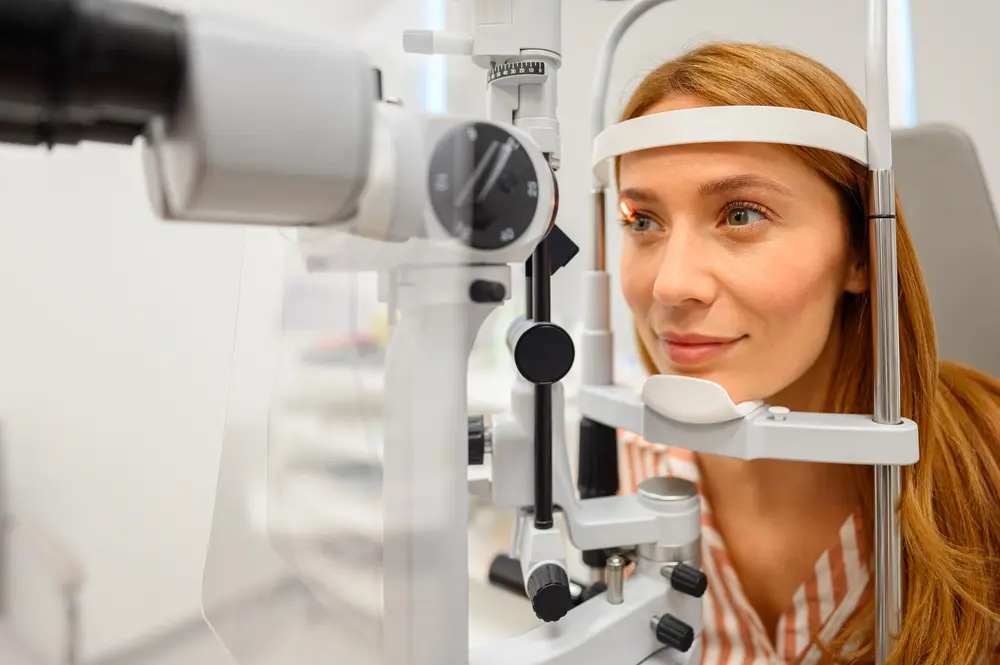
Have FSA money left for 2026? Many plans expire Dec 31. Use it on an eye exam, glasses or contacts. Book now
Astigmatism is a common eye condition in which the cornea or the lens inside the eye has an uneven curve, steeper one way than the other, so vision is blurry or distorted up close and far away. Glasses or contact lenses correct it, and mild astigmatism may need no correction at all. Modo Optometry: three optometrists, seven days a week, in Marina del Rey. Book online or call (310) 305-2950.
Astigmatism is a refractive error: the cornea, the clear front of the eye, or the lens behind it is egg-shaped rather than evenly round. Light bends by different amounts in different directions and never meets at one sharp point on the retina, so the picture is soft at every distance.
An uneven cornea is called corneal astigmatism, and an uneven lens, lenticular astigmatism. Many people have it along with nearsightedness or farsightedness.
Sources differ on when it begins. The National Eye Institute says some people are born with astigmatism and many develop it as children or young adults. The American Optometric Association says it is usually present from birth.
A little astigmatism is normal: a typical eye measures around half to three quarters of a diopter, and glasses or contacts are usually needed for clear vision from about one and a half diopters up.
Astigmatism is caused by an unevenly curved cornea or lens, and why the curve differs from person to person is not known. The cornea is the usual source.
Astigmatism tends to run in families, so a parent with it raises the odds for a child. Because it comes from the eye's own shape, there is no known way to prevent it.
Astigmatism can develop after an injury to the eye. Less often, other problems can cause it, among them eyelids pressing too hard on the eye or a stye.
Astigmatism sometimes appears after eye surgery, and cataract surgery is one of the operations that can leave it behind.
Keratoconus is an uncommon condition in which the cornea grows thinner and bulges into a cone shape, and it raises the risk of astigmatism. Astigmatism that keeps getting worse can be a sign of it.
Astigmatism is not brought on by squinting, by sitting near the TV, or by reading in dim light, and none of those habits makes it worse.
The symptoms of astigmatism are blurred or distorted sight near and far, headaches, tired or strained eyes, poor night vision, and squinting to see. Mild astigmatism may cause no symptoms at all, which is one reason regular eye exams matter.
Astigmatism is diagnosed in a comprehensive eye exam, usually without any special test: the exam finds out how sharply each eye sees and what correction would sharpen it. Testing may begin with the letter chart, where 20/20 stands for normal distance vision.
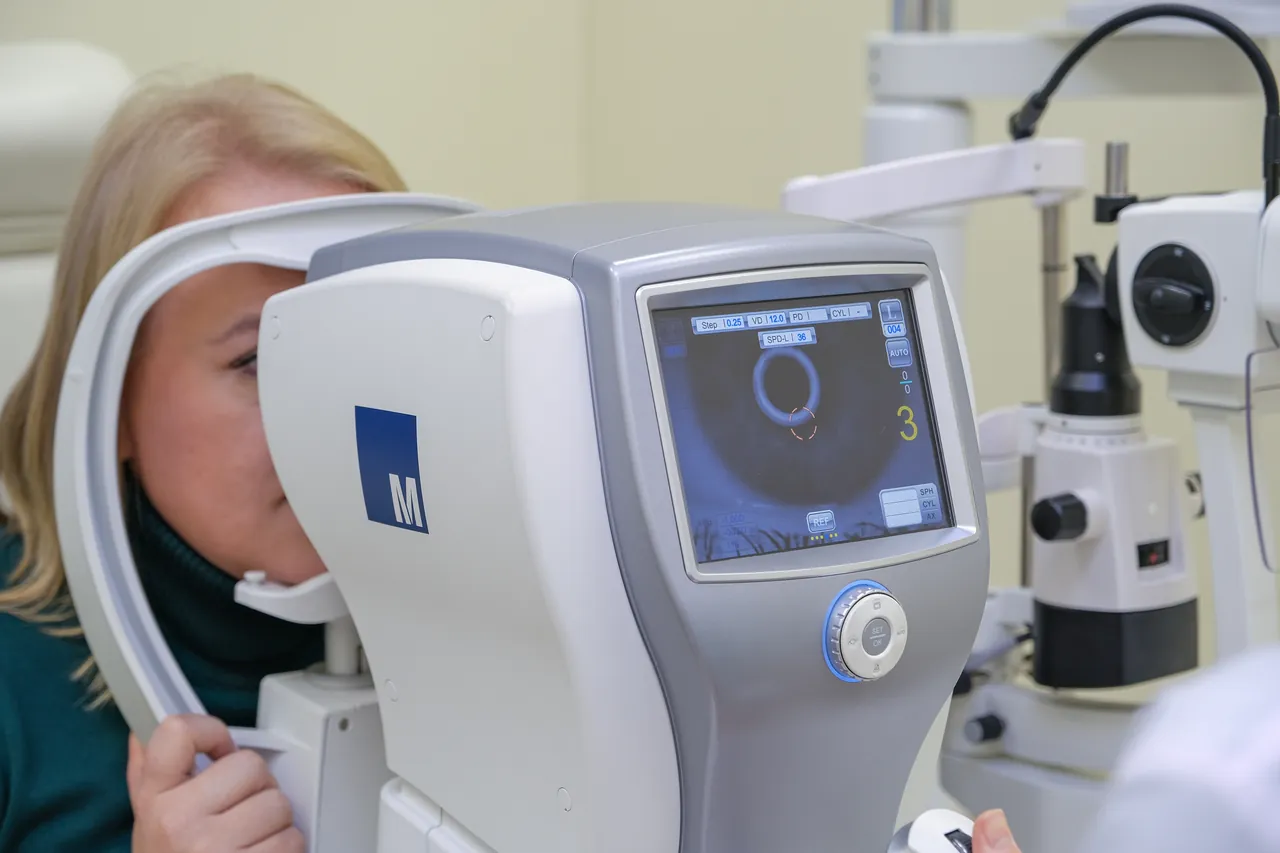
An autorefractor can estimate the prescription by sending light into the eye and reading what comes back. At Modo Optometry, automated readings give the doctor a starting point.
In a refraction you look through a phoropter, a binocular-style device holding a series of lenses, and say which view is sharper; your answers set the correcting power. At Modo Optometry, the refraction is refined by hand.
Testing may also measure the cornea's curve, with an instrument called a keratometer or a more detailed topography map. At Modo Optometry, the cornea is measured for curve and width during a contact lens fitting.
You leave with a prescription, a treatment plan, a date to return, or a referral if a specialist is needed.
Blurry or distorted vision? Book an eye exam online or call (310) 305-2950, seven days a week.
Astigmatism is treated with glasses or contact lenses that correct the blur, or with refractive surgery that reshapes the cornea, and mild astigmatism may need no treatment. Glasses carry a cylinder power that adds correction along one direction of the lens. Toric soft lenses handle many kinds of astigmatism, and rigid gas permeable lenses, which keep their shape on the eye, can suit more severe or irregular cases. LASIK and PRK reshape the cornea with a laser. The best choice depends on your eyes and your day. At Modo Optometry, frames and lenses are fitted in the same shop, and the contact lens fitting decides between a toric and a rigid lens.
See an eye doctor for astigmatism when blurry vision, eye strain, or headaches get in the way of everyday tasks, or when your sight keeps slipping even with your current glasses or contacts. A child's eyes are worth checking even without a complaint, because a blurry world can seem normal to a child. Blur that comes on suddenly is a different problem: a red, painful, or suddenly blurry eye is seen the same day during business hours, so call first and say what happened. For sudden loss of vision, go to the emergency room first. An eye exam can be booked online or by calling (310) 305-2950, seven days a week.

A routine exam to check your prescription bills to a vision plan. A visit for a symptom or a medical condition bills to medical insurance instead.
VSP, EyeMed, and Blue Shield are in network. Bring your vision and medical insurance cards and a photo ID.
Plan not in network? Many plans still reimburse part of an exam with the itemized paperwork you leave with. Call (310) 305-2950 and ask before you come in.
Doctor of Optometry since 1994, with certificates in the treatment and management of ocular disease and of glaucoma.
Residency in pediatrics, vision therapy, and neuro-optometric rehabilitation. Glaucoma certified, licensed in California and Washington.
UC Berkeley Doctor of Optometry with a residency in ocular disease. Glaucoma and therapeutic pharmaceutical agent certified.
Office Hours
| Monday | 10:00am – 6:00pm |
| Tuesday | 10:00am – 6:00pm |
| Wednesday | 10:00am – 6:00pm |
| Thursday | 10:00am – 6:00pm |
| Friday | 10:00am – 6:00pm |
| Saturday | 10:00am – 6:00pm |
| Sunday | 11:00am – 4:00pm |
Yes, contacts can correct astigmatism, but it takes a lens designed for it: a toric soft lens, or a rigid gas permeable lens that holds its shape on the eye, often the better choice for stronger or irregular astigmatism. At Modo Optometry, toric lenses come in daily and monthly versions, and the fitting decides whether a toric or a rigid lens suits your eyes.
Yes, astigmatism can cause headaches, often along with eye strain and blurry vision. Plenty of other things cause headaches too, so an eye exam is the way to find out whether astigmatism is behind them.
Astigmatism can get worse over time, though it can also lessen or not change at all, and childhood growth and later aging are the usual times it shifts. Astigmatism that keeps worsening can point to keratoconus, and regular exams keep your prescription current.
An optometrist or an ophthalmologist can diagnose astigmatism in a comprehensive eye exam and prescribe glasses or contact lenses; laser surgery to reshape the cornea is done by an ophthalmologist. Modo Optometry: three optometrists, seven days a week, in Marina del Rey. Book online or call (310) 305-2950.
Yes, children can have astigmatism; it is common in children, who often do not know their vision is blurry. Uncorrected, it can affect how a child does in class and on the field, and when only one eye is affected it can lead to amblyopia (lazy eye). At Modo Optometry, children are seen for comprehensive exams from age 3.
Book online or call Modo Optometry at (310) 305-2950. Three optometrists, seven days a week in Marina del Rey. Bring your current glasses or contact lens boxes and your insurance cards.