Eye allergies, or allergic conjunctivitis, happen when pollen, dust, pet dander, or mold sets off a reaction on the surface of the eye, leaving both eyes red, itchy, watery, and puffy. They are not contagious, and avoiding the trigger plus the right drops usually brings relief. At Modo Optometry in Marina del Rey, eye allergies are seen the same day during business hours, seven days a week. Call (310) 305-2950 first.
Eye allergies are an immune reaction in the conjunctiva, the thin clear tissue that covers the white of the eye and lines the eyelids. The body treats a harmless particle as a threat, and mast cells in the eye respond by releasing histamine, along with other inflammatory chemicals. Blood vessels swell, and the eye turns red, itchy, and teary.
Doctors call this allergic conjunctivitis. It is a kind of pink eye, but unlike the viral and bacterial kinds, it is not contagious.
Many people with eye allergies also have nasal allergies, with sneezing and an itchy, stuffy nose. A family history of allergies makes them more likely.
Trees, grasses, and ragweed release pollen during their seasons, and symptoms follow. This seasonal form, sometimes called hay fever conjunctivitis, is the most common type. Pollen levels climb on hot, dry, windy days and drop after rain.
Dust mites, pet dander, and mold can cause symptoms in any month. This is the perennial, or year-round, form.
Perfume, cologne, eye makeup, and the chemicals in soaps, lotions, and detergents can all set off a reaction around the eyes.
Some people react to the preservative in lubricating or prescription drops. Preservative-free versions avoid it.
Allergens can build up on the surface of a lens, and lenses can be uncomfortable to wear during an allergy flare.
Smoke is a trigger too, so it helps not to smoke and to stay away from secondhand smoke.
Eye allergies usually show up in both eyes at once.
An eye exam confirms an allergy and rules out an infection. The doctor asks when the symptoms started, whether both eyes are involved, whether they come and go with the seasons, and about any allergies in you or your family.
Each eye is tested, so any change in vision is picked up.
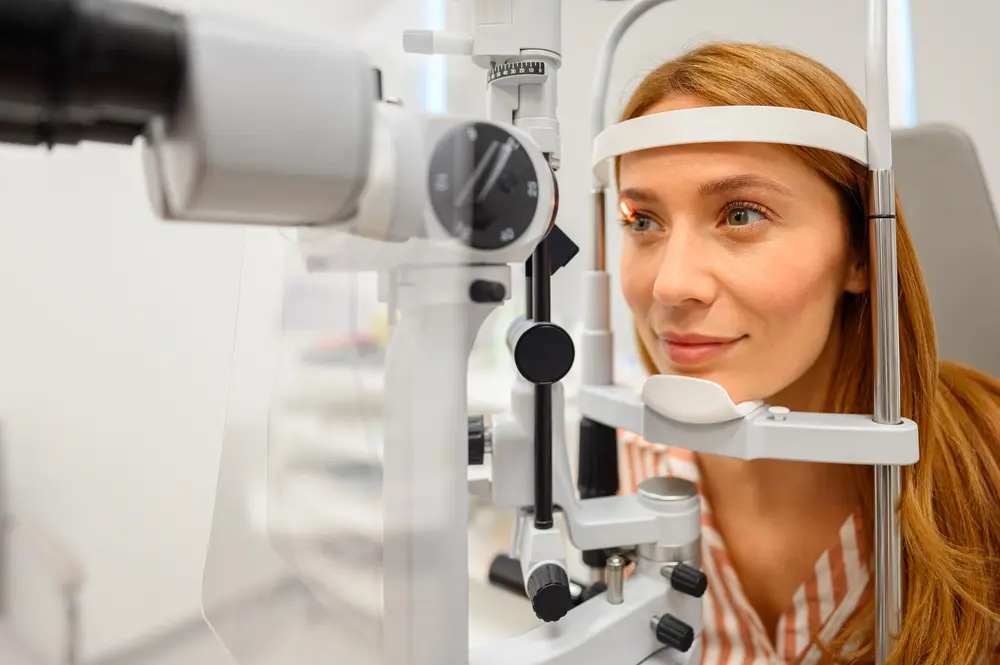
Under the slit lamp, the doctor looks for the signs of an allergy: dilated vessels on the white of the eye, a puffy lining and lids, and a pattern of small bumps under the lids.
Viral and bacterial pink eye can look like an allergy, and dry eye can feel much the same. Under the slit lamp, allergic, viral, and bacterial conjunctivitis look different, and the treatment depends on which it is.
When the trigger is unclear or symptoms do not settle with treatment, an allergist can run skin or blood tests to find what you are allergic to.
Red, itchy, watery eyes every allergy season? Call (310) 305-2950. Same-day visits, seven days a week.
Avoiding the trigger is the most effective treatment, and drops relieve what avoidance cannot. Artificial tears flush allergens away and add moisture, and a cool compress calms the itch. Antihistamine drops ease itching. Mast cell stabilizer drops, often combined with an antihistamine, prevent a reaction and work best when started before exposure. Decongestant drops take the red out, but used for more than a short stretch they can make the redness worse. Allergy pills can help, though they can dry the eyes. For severe or long-lasting allergies, steroid drops are prescription only and used under medical supervision, because they need eye pressure checks. When drops and avoidance are not enough, an allergist can talk to you about allergy shots. At Modo Optometry, the doctor looks under magnification, confirms whether it is an allergy, and prescribes the drops the diagnosis calls for. Do not put allergy drops in with contact lenses in, and keep your hands away from your eyes; rubbing irritates the eyes and adds to the swelling.
See an eye doctor if symptoms are not improving with home care and over-the-counter drops, if the skin around the eyes turns red or swollen, or if you get a headache along with the eye symptoms. Get medical help right away for eye pain that is severe or getting worse, or for any change in your vision. A red, painful eye in a contact lens wearer needs an eye doctor rather than more allergy drops. Modo Optometry sees eye allergies the same day during business hours, seven days a week; call (310) 305-2950 first. For a chemical splash, a cut or punctured eye, or sudden loss of vision, go to the emergency room first. If the office is closed and the eye can wait until morning, keep contact lenses out, do not rub it, and call when we open.

A visit for eye allergies is a medical visit. It bills to your medical insurance, not to a vision plan, with that plan's copay and possibly a deductible.
Medicare and Blue Shield are in network for medical eye care. Bring your medical insurance card and a photo ID.
Plan not in network, or no insurance? You leave with an itemized bill, which an out-of-network plan may partly reimburse. Call (310) 305-2950 and ask before you come in.
Doctor of Optometry since 1994, with certificates in the treatment and management of ocular disease and of glaucoma.
Residency in pediatrics, vision therapy, and neuro-optometric rehabilitation. Glaucoma certified, licensed in California and Washington.
UC Berkeley Doctor of Optometry with a residency in ocular disease. Glaucoma and therapeutic pharmaceutical agent certified.
Office Hours
| Monday | 10:00am – 6:00pm |
| Tuesday | 10:00am – 6:00pm |
| Wednesday | 10:00am – 6:00pm |
| Thursday | 10:00am – 6:00pm |
| Friday | 10:00am – 6:00pm |
| Saturday | 10:00am – 6:00pm |
| Sunday | 11:00am – 4:00pm |
Start by limiting contact with what you are allergic to. Rinse the eyes with artificial tears, use a cool compress, and use allergy eye drops for the itch. If symptoms keep coming back, drops that prevent the reaction work best when used before contact with the allergen. If home care is not helping, an eye exam confirms the cause and the right prescription drops.
Pollen from trees, grasses, and ragweed causes the most common, seasonal type. Dust mites, pet dander, and mold cause year-round eye allergies. Perfume, cosmetics, and the preservatives in some eye drops can set off a reaction too.
Viral and bacterial pink eye are the most common look-alikes, and dry eye can feel similar too. Allergies usually affect both eyes and itch, with a watery or stringy discharge. Viral or bacterial pink eye more often starts in one eye. An eye exam separates them, which matters because the treatments differ.
Symptoms tend to persist while the exposure continues, such as a pet at home, dust in the bedroom, or a long pollen season. Overusing decongestant drops can keep the eyes red, and some people react to the preservative in their drops. Dry eye or another condition may also be behind it. If symptoms are not settling, an eye exam is the next step.
Avoiding the trigger comes first. Beyond that, the best drop depends on the pattern: antihistamine drops for quick relief of itching, combination drops with a mast cell stabilizer to prevent flare-ups, and prescription drops for severe or chronic allergies. The doctor matches the drop to your symptoms after examining the eye.
No. Allergic conjunctivitis does not spread from person to person. Viral and bacterial pink eye do, so an eye that is red with discharge, especially in one eye only, should be checked before you assume it is an allergy.
Lenses can be uncomfortable during an allergy flare, and allergens build up on them. Wearing glasses for a while helps, and daily disposable lenses, thrown away after one wear, cut down on buildup. Do not put allergy drops in while your lenses are in.
Indoors, keep the bedroom pet-free, wash up after handling an animal, use allergen-proof covers on pillows and bedding, and wet-mop floors instead of sweeping them. Wash your hands often, and shower before bed to rinse pollen off. Outdoors, wear sunglasses. On high-pollen days, shut the windows at home and in the car, and skip window fans, which pull pollen in; mid-morning and early evening are usually the worst hours, so stay inside then if you can.
Usually not. Vision is affected only rarely, when the inflammation is severe. Any real change in your vision, or eye pain, should be checked right away rather than treated as an allergy.
Call Modo Optometry at (310) 305-2950 and come in the same day, seven days a week during business hours. Take out contact lenses, do not rub your eyes, and bring your medical insurance card.