Itchy eyes are a common sign of allergies, and dry eye, inflamed eyelids (blepharitis), contact lenses, and pink eye can cause itching too. The cause decides the treatment, and an eye exam usually finds it. At Modo Optometry in Marina del Rey, itchy eyes are seen the same day during business hours, seven days a week. Call (310) 305-2950 first.
Allergies are a common reason for itchy eyes. When pollen, dust, pet dander, or mold lands on the eye, the eye responds with histamine, and that is what turns it red, itchy, and watery. This is allergic conjunctivitis, and it usually affects both eyes.
Dry eye itches too. If there are too few tears, or they evaporate before they have done their job, the surface feels scratchy and gritty, and wind and smoke make it worse.
With blepharitis, the eyelids themselves are inflamed: red, puffy, and itchy, often with flakes or crusts where the lashes meet the lid. Contact lenses can irritate the inside of the lid, and viral or bacterial pink eye can itch alongside its redness and discharge.
Because these look alike from the outside and are treated differently, an eye exam is how the cause gets settled.
Tree, grass, and weed pollen, pet dander, dust, mold, and smoke are the usual triggers. Cosmetics, perfume, and the preservatives in some eye drops can set off a reaction as well. Nobody catches an allergy from someone else.
When the tear film is too thin or breaks up too fast, the surface turns scratchy and irritated. Screen time, wind, dry air, long contact lens wear, and some medicines, including allergy pills, make it worse.
Inflamed eyelids with crusts or flakes along the lashes. People with dandruff, oily skin, or rosacea get it more often, and it can sit alongside dry eye.
Giant papillary conjunctivitis is a reaction on the inside of the lid to a lens that rubs it, to deposits that build up on the lens, or to the cleaning solution. The eyes turn red and itchy, and the lens may feel as if it shifts with each blink.
Viral or bacterial conjunctivitis can itch along with redness and discharge. These kinds are contagious, which allergies are not, and viral pink eye usually begins in one eye.
A swim in a chlorinated pool, eye makeup, cigarette smoke, polluted air, and a dry day can each leave the surface of the eye irritated. So can an eyelash or a speck of debris under the lid.
The symptoms that come with the itch are what point to the cause.
An eye exam finds the cause. The visit starts with when the itching began, whether it is one eye or both, what the discharge looks like, whether you wear contact lenses, and whether you have allergies or a cold.
Each eye is tested, so any change in how well you see is picked up.
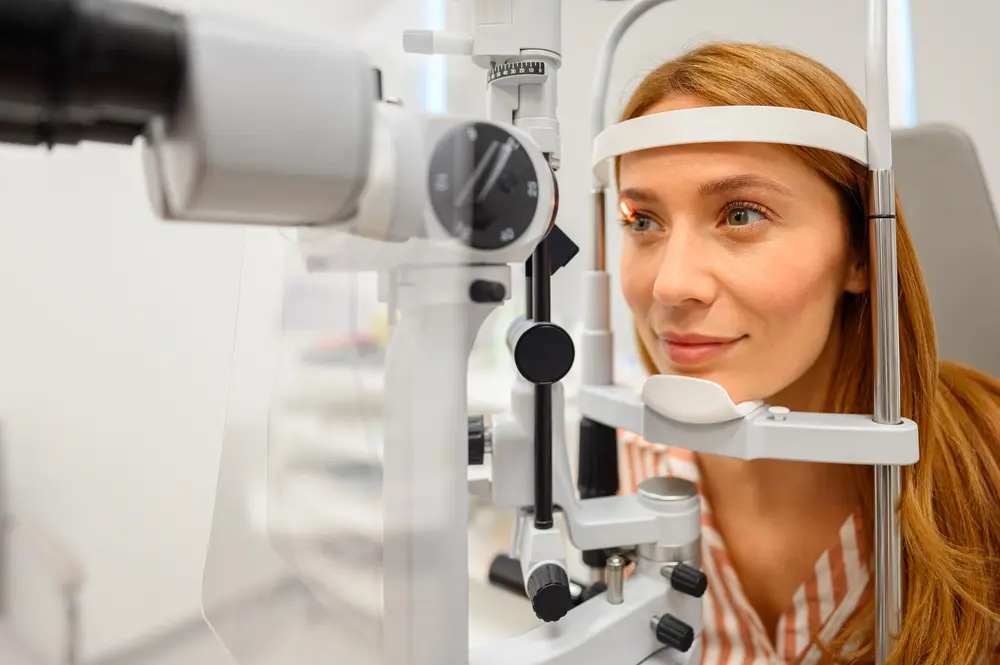
Under the slit lamp, the doctor looks at the eyelids, the lashes, and the surface of the eye. Swollen vessels, bumps on the inside of the lid, crusts at the lash line, and the type of discharge each point to a different cause.
If dry eye is suspected, the doctor checks the tears and the oil glands along the lid margin, because dry eye and allergies can feel the same and are treated differently.
If the trigger is not obvious, skin or blood testing by an allergist can find what you are allergic to.
Itchy, red, or watery eyes that will not settle? Call (310) 305-2950. Same-day visits, seven days a week.
Treatment depends on the cause. For allergies, the first step is staying away from the trigger where you can, and artificial tears rinse allergens off the surface of the eye. Allergy eye drops relieve the itch, and prescription drops are an option when the reaction is severe or chronic. An antihistamine pill can take the edge off, at the cost of drier eyes, which can leave them itchier. Dry eye is treated with artificial tears and care for the eyelids. Blepharitis responds to warm compresses and daily lid cleaning. A contact lens problem usually means a break from lenses, then a change of lens type or solution. Bacterial pink eye may be treated with antibiotic drops, which do nothing for allergies. At Modo Optometry, the doctor looks under magnification, tells you which it is, and prescribes the drops or medication it needs. Whatever the cause, try not to rub your eyes; it makes the irritation and swelling worse.

See an eye doctor if the itching is not improving after a few days of home care, or sooner if you have light sensitivity, thick green or yellow discharge, lids crusted shut, or swelling of the eyelids that is getting worse. A contact lens wearer with a red, painful eye should take the lens out and be seen the same day. Severe eye pain or a sudden change in your vision needs medical help right away. Modo Optometry sees itchy, red, or irritated eyes the same day during business hours, seven days a week; call (310) 305-2950 first. For a chemical splash, a cut or punctured eye, or sudden loss of vision, go to the emergency room first. If the office is closed and the eye can wait until morning, keep contact lenses out, do not rub it, and call when we open.

A visit for itchy, red, or irritated eyes is a medical visit. It bills to your medical insurance, not to a vision plan, with that plan's copay and possibly a deductible.
Medicare and Blue Shield are in network for medical eye care. Bring your medical insurance card and a photo ID.
Plan not in network, or no insurance? You leave with an itemized bill, which an out-of-network plan may partly reimburse. Call (310) 305-2950 and ask before you come in.
Doctor of Optometry since 1994, with certificates in the treatment and management of ocular disease and of glaucoma.
Residency in pediatrics, vision therapy, and neuro-optometric rehabilitation. Glaucoma certified, licensed in California and Washington.
UC Berkeley Doctor of Optometry with a residency in ocular disease. Glaucoma and therapeutic pharmaceutical agent certified.
Office Hours
| Monday | 10:00am – 6:00pm |
| Tuesday | 10:00am – 6:00pm |
| Wednesday | 10:00am – 6:00pm |
| Thursday | 10:00am – 6:00pm |
| Friday | 10:00am – 6:00pm |
| Saturday | 10:00am – 6:00pm |
| Sunday | 11:00am – 4:00pm |
Find the cause and treat that. For allergies, avoid the trigger where you can, use artificial tears to rinse allergens away, and use allergy eye drops for the itch. For dry eye, artificial tears and lid care help. For blepharitis, warm compresses and lid cleaning. If home care is not working after a few days, an eye exam can find which one you have.
Get medical help right away if the itch comes with severe pain, light sensitivity, or blurred vision. Thick green or yellow discharge, lids crusted shut, or eyelid swelling that is getting worse also need an eye doctor rather than more home care. A red, painful eye in a contact lens wearer is treated as an infection until proven otherwise. For an itchy eye that is red, watery, or crusted, Modo Optometry offers same-day visits; call (310) 305-2950.
Allergies are a common reason: the eye releases histamine in response to pollen, dust, dander, or mold, and both eyes turn red, itchy, and watery. Dry eye, blepharitis, contact lens irritation, pink eye, and irritants like smoke or pool water are the other usual causes.
Allergic conjunctivitis, dry eye, blepharitis, giant papillary conjunctivitis in contact lens wearers, and viral or bacterial pink eye are the common ones. Other causes include rosacea that affects the eyelids and autoimmune conditions that lower tear production.
Allergies are a common cause. Histamine makes the eyes itch and water at the same time, and both eyes are usually affected. Dry eye can cause watering too, because an irritated eye makes extra tears that run off instead of staying on the surface.
A clean, cool compress on closed lids eases itching from allergies, and artificial tears wash allergens off the eye. For crusted or inflamed lids, a warm compress loosens the flakes. Do not rub your eyes, and if you wear contact lenses, leave them out until the eye settles.
The one that matches the cause, which is why an exam comes first. Allergy eye drops treat allergies, artificial tears and lid care treat dry eye, lid hygiene treats blepharitis, and a lens break treats contact lens irritation. Antibiotic drops treat a bacterial infection and do nothing for an allergy.
Yes. Giant papillary conjunctivitis is a reaction on the inside of the eyelid to a lens that rubs it, to deposits on the lens, or to the cleaning solution. The eyes turn red and itchy, and the lens may feel as if it shifts when you blink. Lens wearers with allergies are more likely to get it. During allergy season, glasses or daily disposable lenses can help.
Allergic itching is not contagious. Viral and bacterial pink eye are, and they can itch too, so an eye that is red with discharge, especially if it started in one eye, should be checked before you assume it is allergies.
Call Modo Optometry at (310) 305-2950 and come in the same day, seven days a week during business hours. Take out contact lenses, do not rub the eye, and bring your medical insurance card.