Have FSA money left for 2026? Many plans expire Dec 31. Use it on an eye exam, glasses or contacts. Book now
A red eye happens when the small blood vessels on the surface of the eye swell or break. Most red eyes are harmless and settle with home care, but pain, light sensitivity, blurred vision, or discharge can point to an infection or inflammation that needs treatment. At Modo Optometry in Marina del Rey, a red eye is seen the same day during business hours, seven days a week. Call (310) 305-2950 first.
Your eye is red because the tiny blood vessels on its surface have widened or broken. They widen when something irritates the eye or when the eye is inflamed or infected, and the white of the eye turns pink or streaked with red.
Irritation is the usual reason. Allergies, dry eye, smoke, dust, chlorine, tired eyes, and contact lenses worn too long can all turn one or both eyes red, and the eye often feels better than it looks.
A bright red patch with no pain is a different thing: a small vessel has broken and bled under the clear surface layer, much like a bruise. It looks worrying and usually causes no harm.
Some causes are more serious. A red eye that comes with pain, sensitivity to light, blurred vision, or thick discharge can be an infection of the cornea, inflammation inside the eye, or a sudden rise in eye pressure, and those need an eye exam.
A subconjunctival hemorrhage is a spot of blood under the clear layer that covers the white of the eye. A hard cough or sneeze, straining, or rubbing the eye roughly can break a small vessel. It usually does not hurt, rinsing will not clear it, and it fades on its own.
Conjunctivitis inflames the thin membrane over the white of the eye. Viral and bacterial pink eye are contagious and often bring discharge. Allergies turn the eyes red, itchy, and watery, and are not contagious.
Too few tears, long screen sessions, smoke, dust, pool chlorine, and too much sun leave the surface red and irritated. So does an eyelash or a speck of grit.
Lenses worn too long or slept in can redden the eye. Contact lens wearers have a higher risk of a corneal ulcer, an infected sore on the clear front of the eye that brings pain, discharge, and blurred vision.
Uveitis means the inside of the eye is inflamed; iritis is the kind that sits at the front. It can come on suddenly with a red eye, light sensitivity, blurred vision, or new floaters, sometimes painful and sometimes not. Left untreated, it can damage vision.
In acute angle-closure glaucoma, the pressure inside the eye climbs suddenly. One eye turns red and very painful, vision clouds, lights grow halos, and nausea can follow. It needs emergency care.
What comes with the redness says more than the redness itself.
An eye exam finds the cause. It starts with questions: whether one eye or both are red, whether it came on suddenly, whether it hurts, and whether you wear contact lenses.
Each eye is tested, so any drop in vision is picked up.
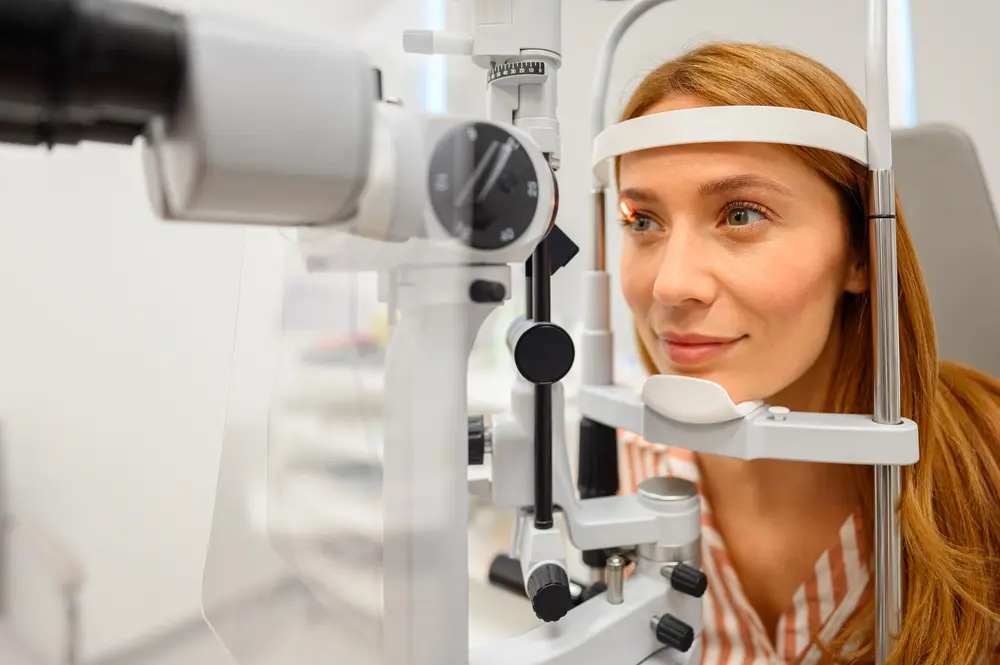
Under the slit lamp, the doctor looks at the lids and the surface of the eye. A yellow dye shows scratches and ulcers on the cornea under blue light.
The pressure inside the eye is measured.
If the inside of the eye or the retina needs to be seen, the pupil is dilated with drops.
Red eye that will not settle? Call (310) 305-2950. Same-day visits, seven days a week.
Treatment depends on the cause. A broken blood vessel needs no treatment and clears by itself; artificial tears help if it feels irritated. Redness from allergies or irritation eases with artificial tears, a cool, damp cloth over closed lids, and staying away from the trigger, and allergy eye drops relieve itching. Redness-relieving drops can make redness come back worse if you use them for a long time. Viral pink eye usually improves on its own, and bacterial pink eye may be treated with antibiotic drops. At Modo Optometry, the doctor looks under magnification, tells you which it is, and prescribes if needed. A corneal ulcer needs medicated drops matched to the germ behind it, whether bacterial, fungal, or viral. Uveitis should be treated without delay, most often with prescription anti-inflammatory drops. Acute glaucoma needs the eye pressure brought down quickly. Do not rub your eyes, and leave contact lenses out until the eye has been checked.

See an eye doctor if a red eye is not getting better, or is getting worse, with home care, or if your eyes turn red often. Thick yellow or green discharge, swelling, light sensitivity, or a fever are reasons to see an eye doctor right away. A contact lens wearer with a red or painful eye should take the lens out and see an eye doctor. Severe eye pain, a sudden change in vision, or a red eye with halos, a bad headache, or nausea needs medical help right away. Modo Optometry sees a red eye the same day during business hours, seven days a week; call (310) 305-2950 first. For a chemical splash, a cut or punctured eye, or sudden loss of vision, go to the emergency room first. If the office is closed and the eye can wait until morning, keep contact lenses out, do not rub it, and call when we open.

A visit for a red eye is a medical visit. It bills to your medical insurance, not to a vision plan, with that plan's copay and possibly a deductible.
Medicare and Blue Shield are in network for medical eye care. Bring your medical insurance card and a photo ID.
Plan not in network, or no insurance? You leave with an itemized bill, which an out-of-network plan may partly reimburse. Call (310) 305-2950 and ask before you come in.
Doctor of Optometry since 1994, with certificates in the treatment and management of ocular disease and of glaucoma.
Residency in pediatrics, vision therapy, and neuro-optometric rehabilitation. Glaucoma certified, licensed in California and Washington.
UC Berkeley Doctor of Optometry with a residency in ocular disease. Glaucoma and therapeutic pharmaceutical agent certified.
Office Hours
| Monday | 10:00am – 6:00pm |
| Tuesday | 10:00am – 6:00pm |
| Wednesday | 10:00am – 6:00pm |
| Thursday | 10:00am – 6:00pm |
| Friday | 10:00am – 6:00pm |
| Saturday | 10:00am – 6:00pm |
| Sunday | 11:00am – 4:00pm |
Treat the cause. For a mild red eye from allergies, dryness, or tired eyes, rest your eyes, use artificial tears, lay a cool washcloth over the closed eyes, and avoid what irritates them. A broken blood vessel clears by itself. Uveitis, corneal ulcers, and some infections need prescription treatment, so a red eye with pain, discharge, or blurred vision should be examined.
Look at what comes with it. Redness with no pain and normal vision is usually not serious. Pain, sensitivity to light, blurred vision, thick discharge, swelling, or a fever are reasons to see an eye doctor right away. Severe pain, a sudden change in vision, halos around lights, or nausea with eye pain need medical help right away.
A single red eye can come from a broken blood vessel, an infection, a scratch, or something caught in the eye. It can also be uveitis or acute glaucoma, which usually bring pain, light sensitivity, or blurred vision with the redness. A red eye on its own with normal vision is often minor; one red eye that hurts or blurs should be checked by an eye doctor.
A bright red patch that appears suddenly is often a broken blood vessel, sometimes after a cough, a sneeze, straining, or rubbing the eye. It does not hurt and does not affect vision. A sudden red eye with pain or blurred vision is different and needs an exam.
Often, yes. Redness from irritation usually settles once the irritation passes, and a broken blood vessel fades on its own, the way a bruise does. A red eye that is not improving, keeps coming back, or comes with pain or vision changes should be seen by an eye doctor.
It can contribute to a broken blood vessel. Less often, a broken vessel is linked to high blood pressure, diabetes, or a blood thinner. If you take a blood thinner, or broken vessels keep happening, tell your doctor.
An eye care provider: an optometrist or an ophthalmologist. They can examine the eye under magnification and find the cause. Modo Optometry’s optometrists see red eyes the same day, seven days a week; call (310) 305-2950.
It depends on the cause. Artificial tears calm irritation and flush out allergens, and allergy eye drops ease itching. Redness-relieving drops can make redness come back worse if used for a long time. Some infections, and inflammation inside the eye, need prescription drops, which is why a red eye that will not settle should be examined first.
Only some are. Viral and bacterial pink eye spread easily, through hands and shared towels. Redness from allergies is not contagious. Keep your hands clean and away from your eyes until you know which it is.
Call Modo Optometry at (310) 305-2950 and come in the same day, seven days a week during business hours. Take out contact lenses, do not rub the eye, and bring your medical insurance card.